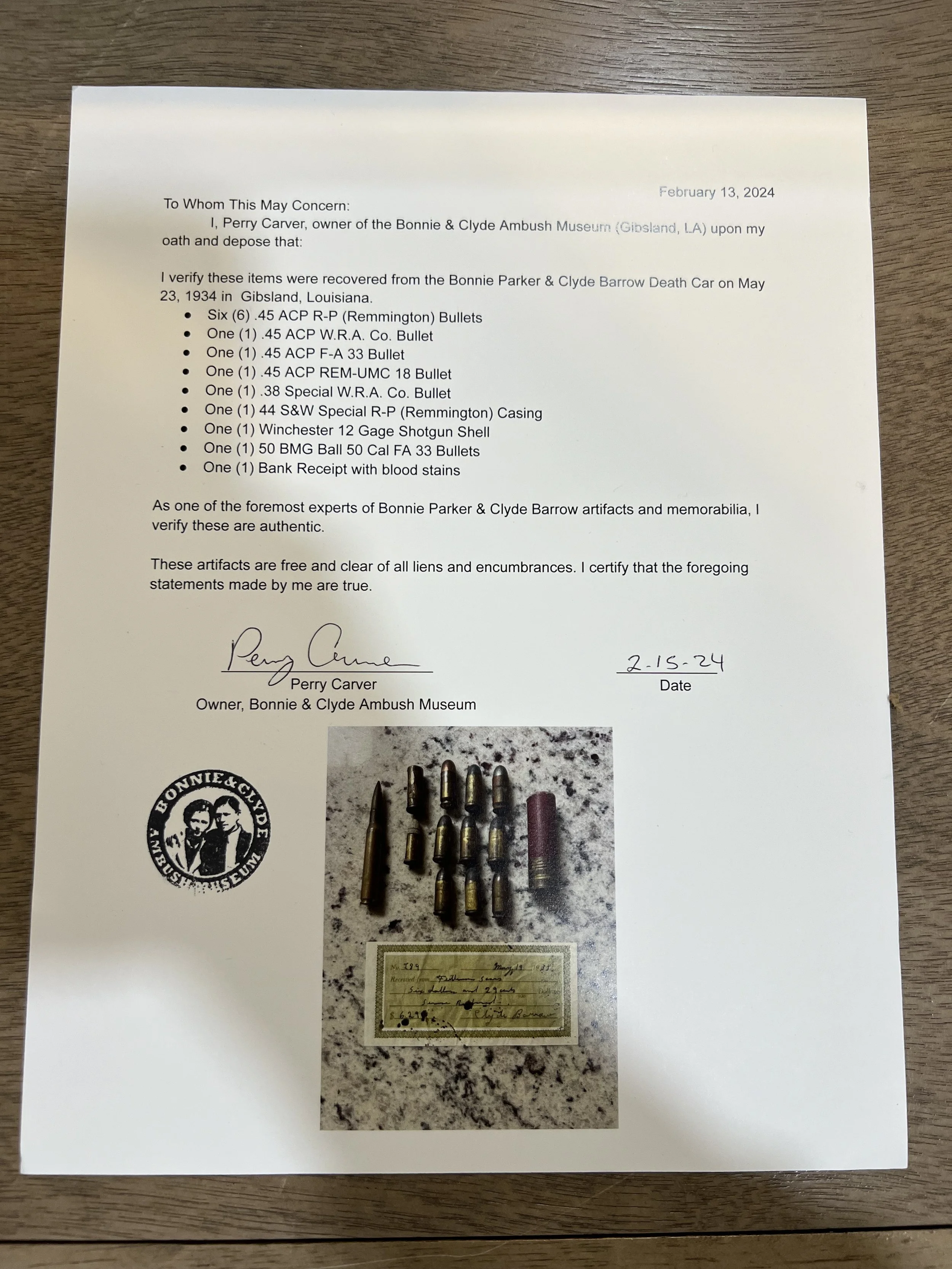
Bonnie & Clyde Death Car Bullets, Hamer-Signed Notes and Deputy O’Rear’s Provenance Letters
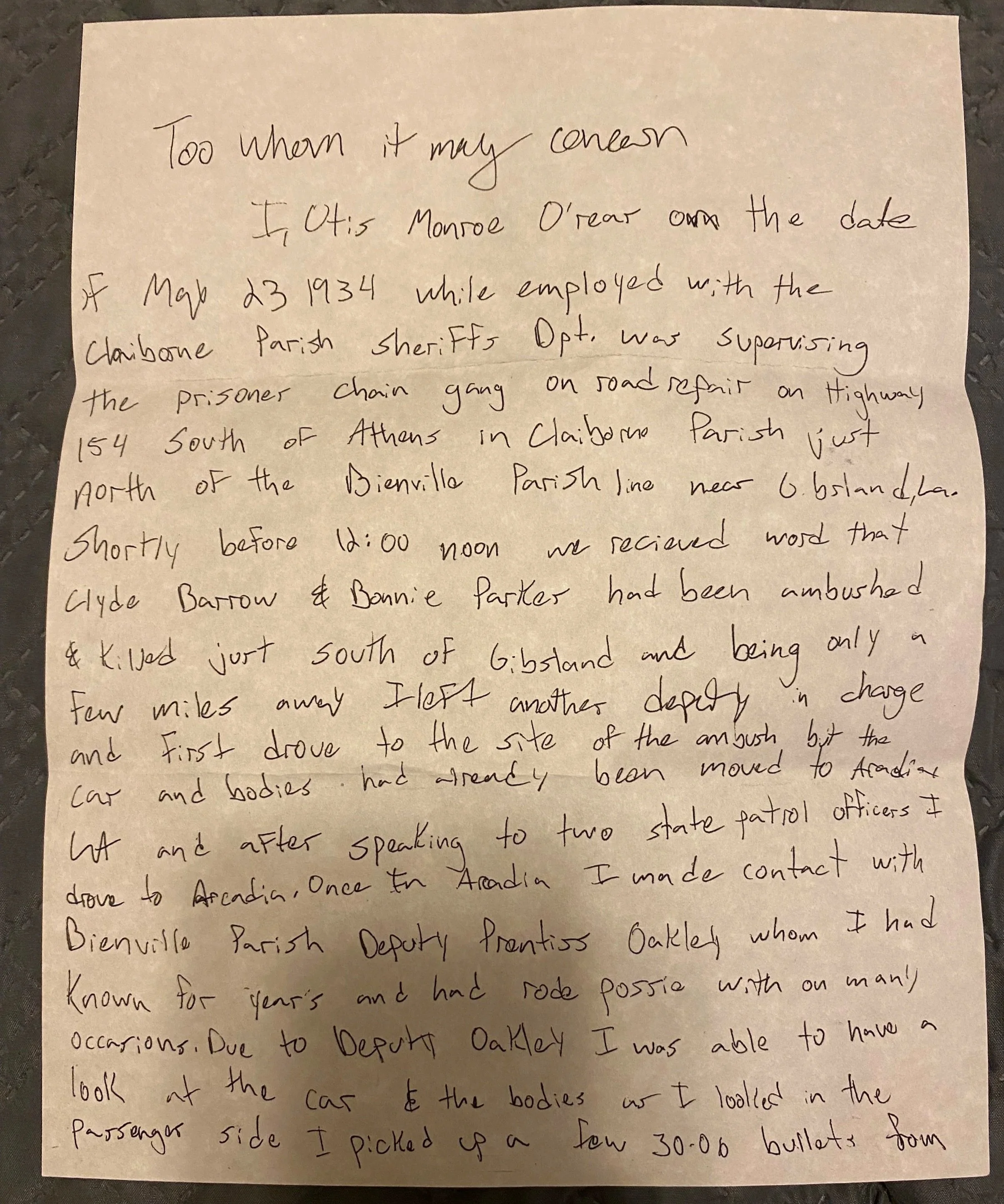
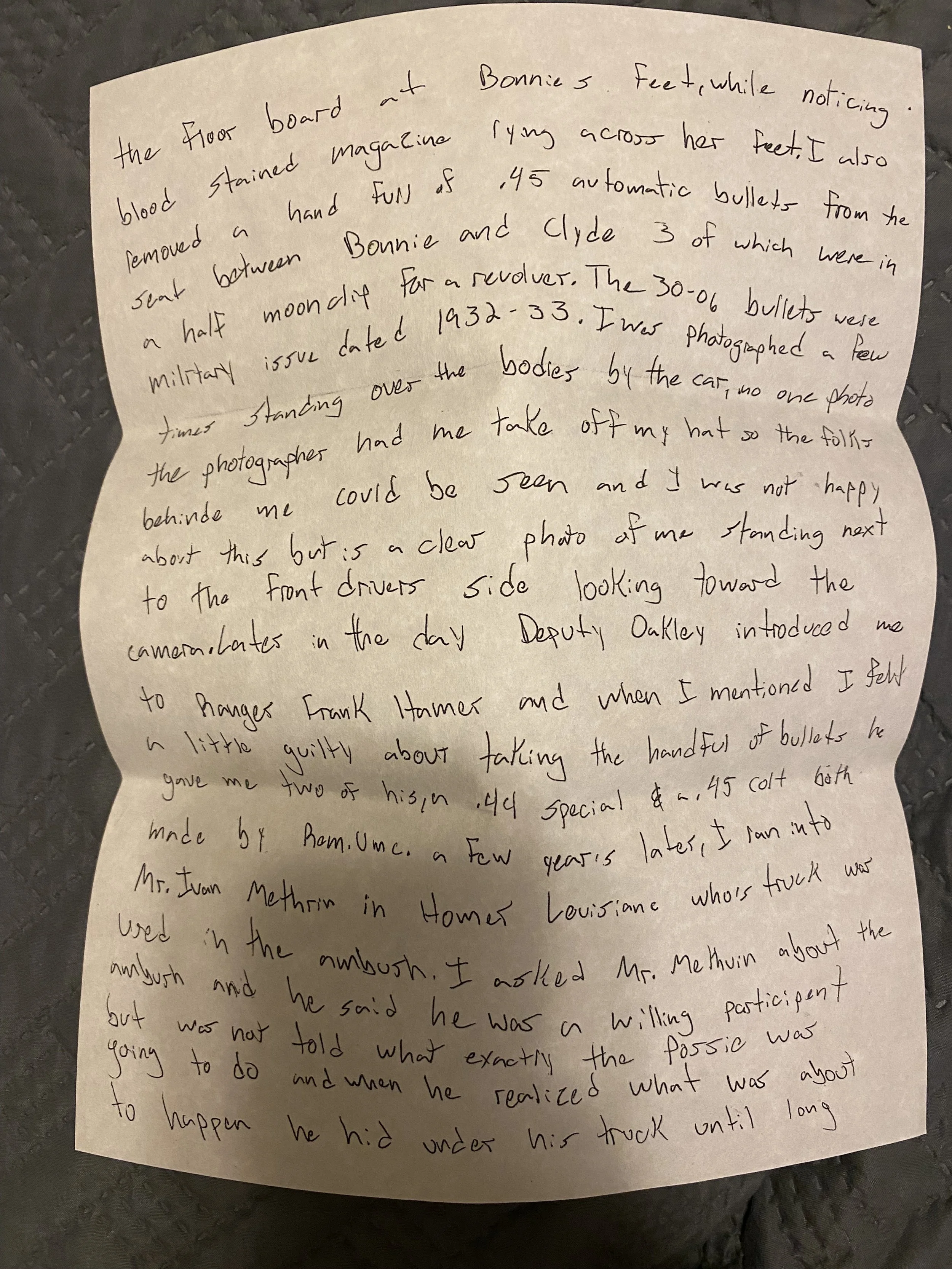
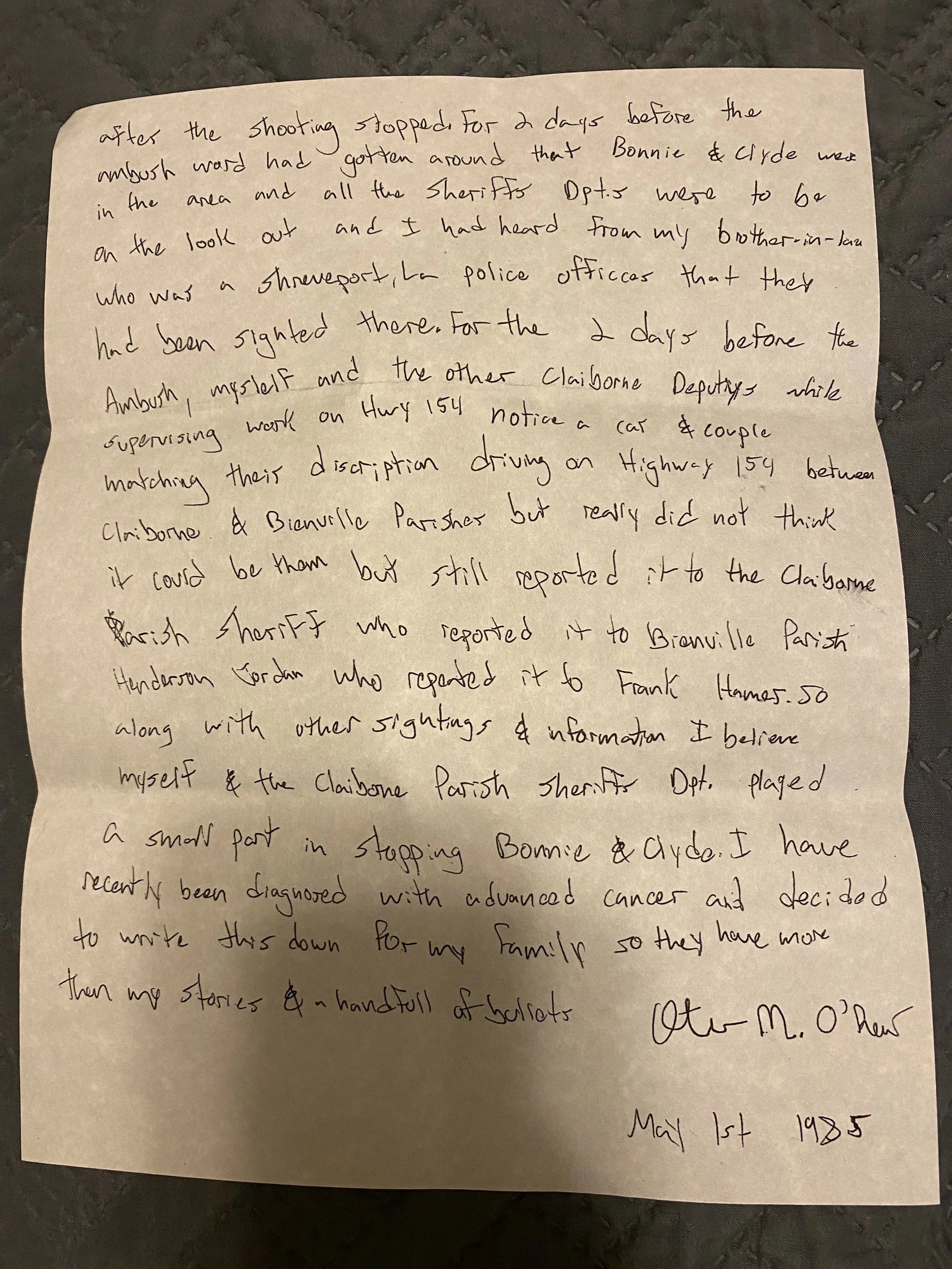
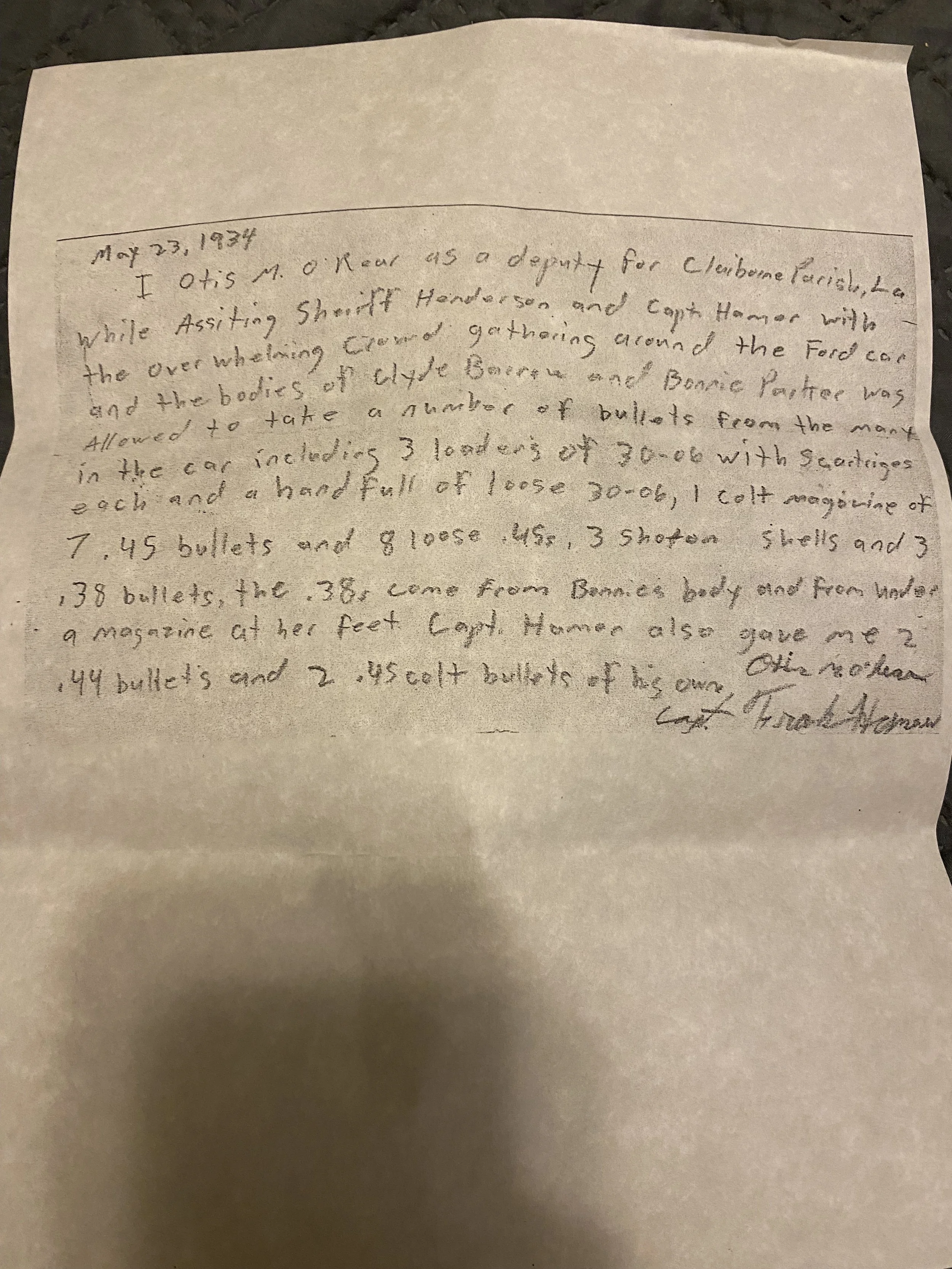
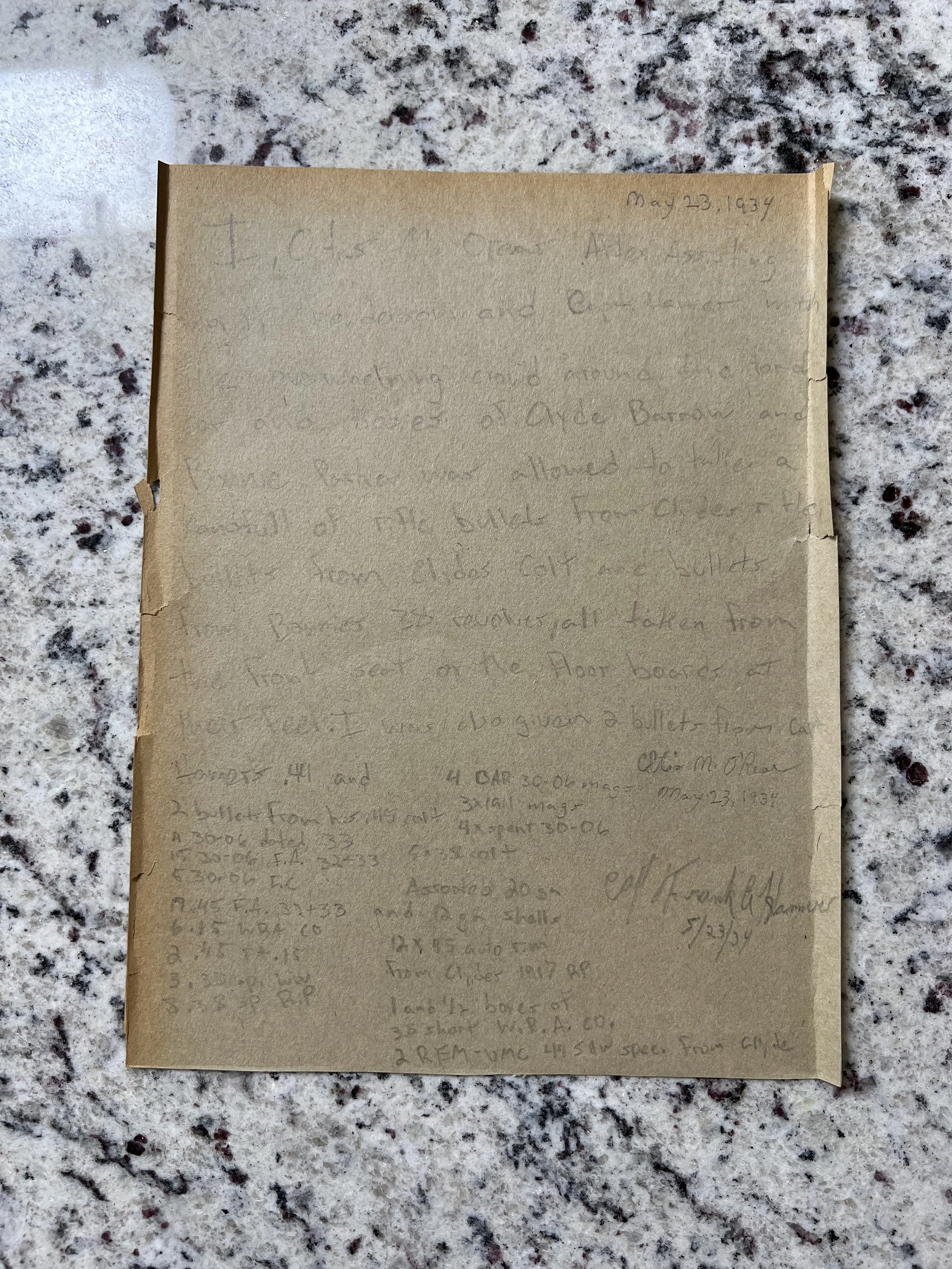
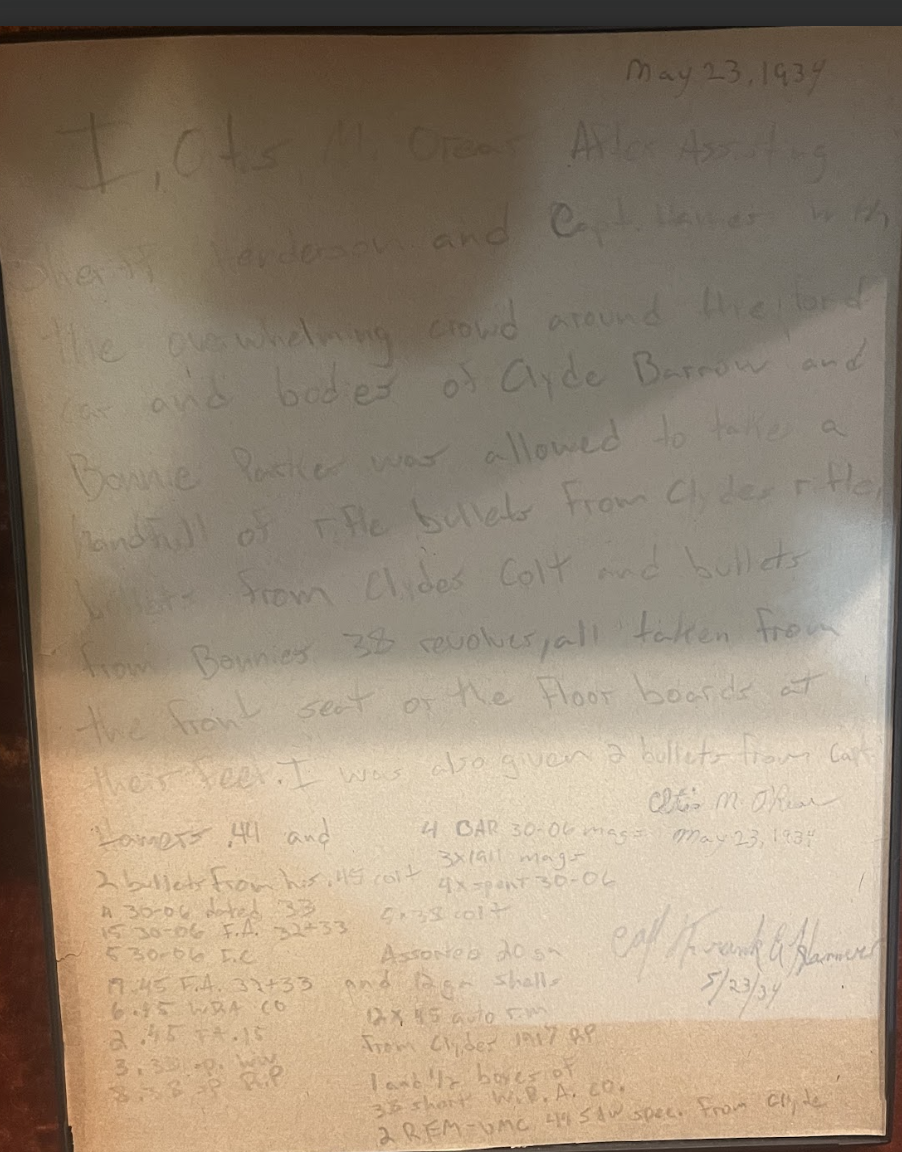
On May 23, 1934, Bonnie Parker and Clyde Barrow were killed in an ambush on Highway 154 near Gibsland, Louisiana, by a posse led by former Texas Ranger Captain Frank Hamer. Their bullet-riddled Ford was towed to Arcadia, where a crowd swarmed it. Among the lawmen who responded was Otis M. O’Rear, a Claiborne Parish deputy who had been supervising a prisoner road crew on the same highway. In a later letter he recounts that Bienville Parish Deputy Prentiss Oakley, whom he had ridden with for years, got him close to the car and the bodies. Looking in, he picked up .30-06 rifle cartridges from the floorboard at Bonnie’s feet and a handful of .45 automatic cartridges from the seat between the two outlaws, three of them in a half moon clip for a revolver. He noted that the .30-06 rounds were military issue dated 1932 and 1933, and that a blood-stained magazine lay across Bonnie’s feet. The lawmen and the crowd were taking souvenirs, and O’Rear was photographed standing by the driver’s side of the car.
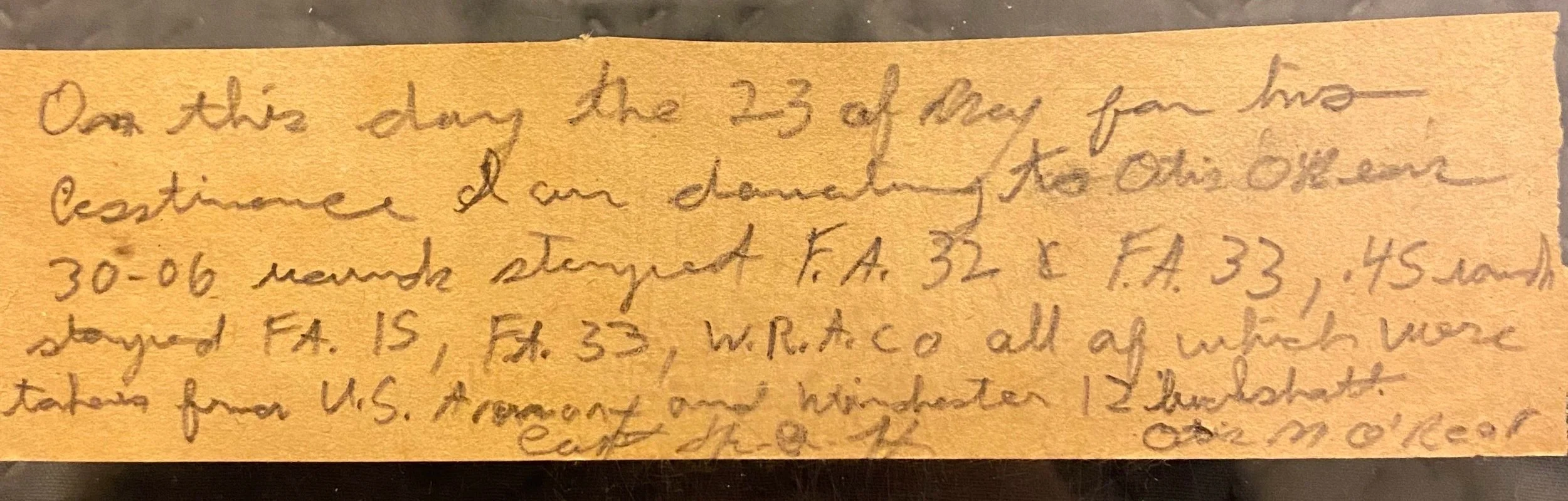
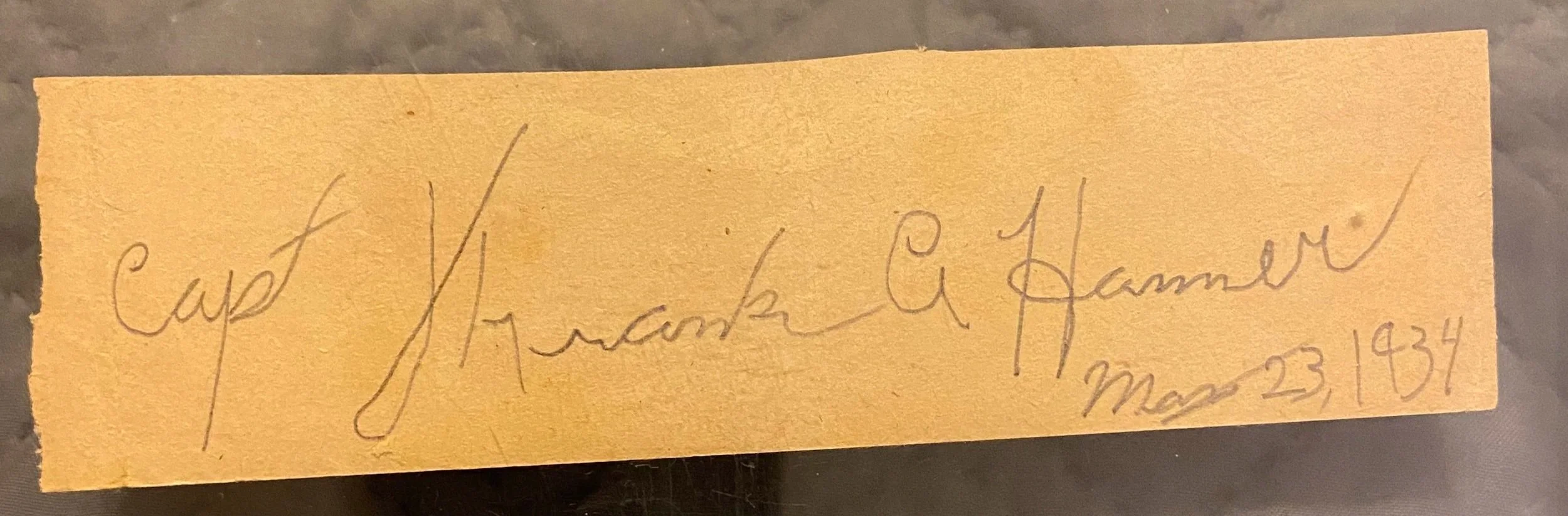
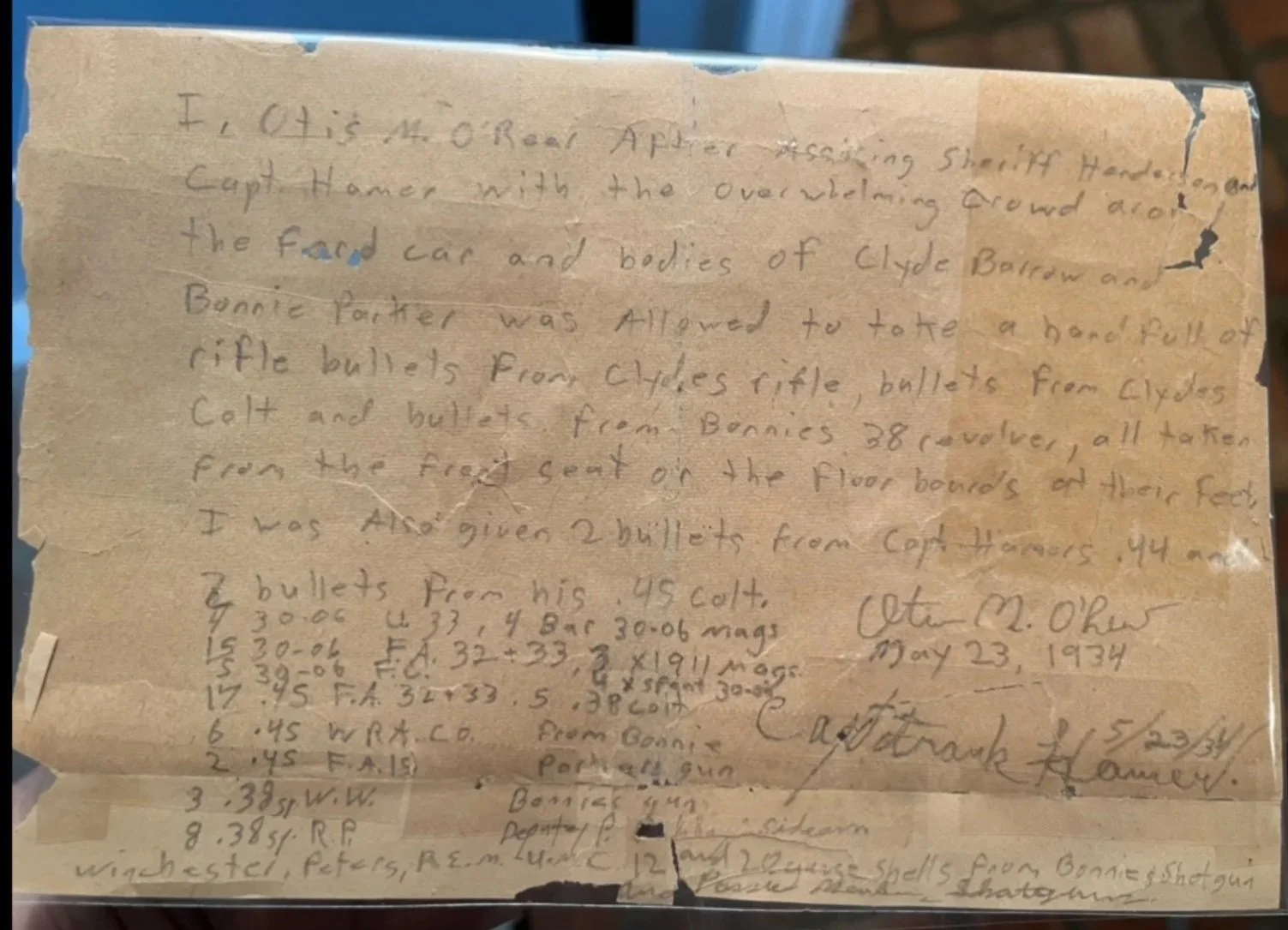
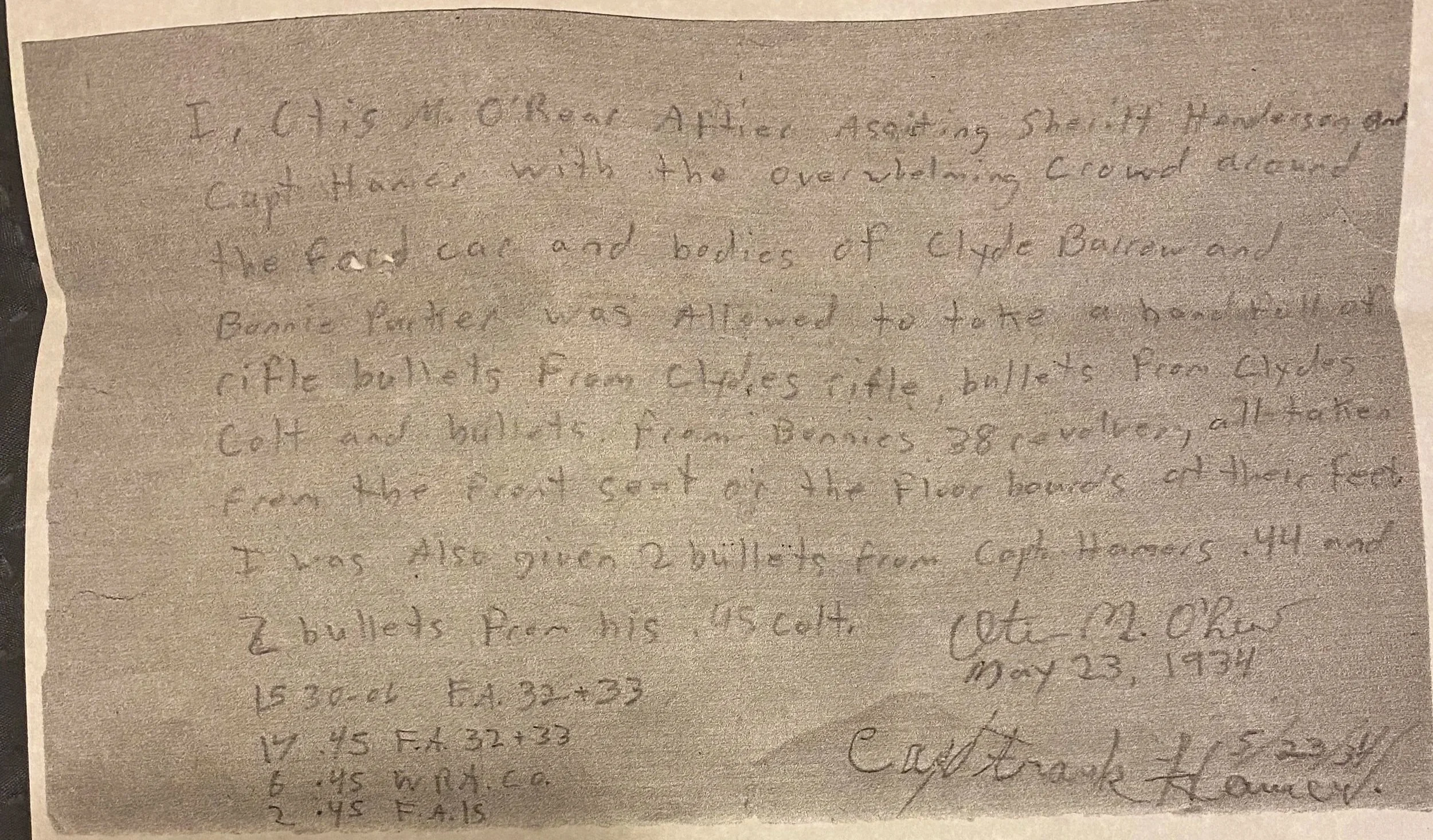
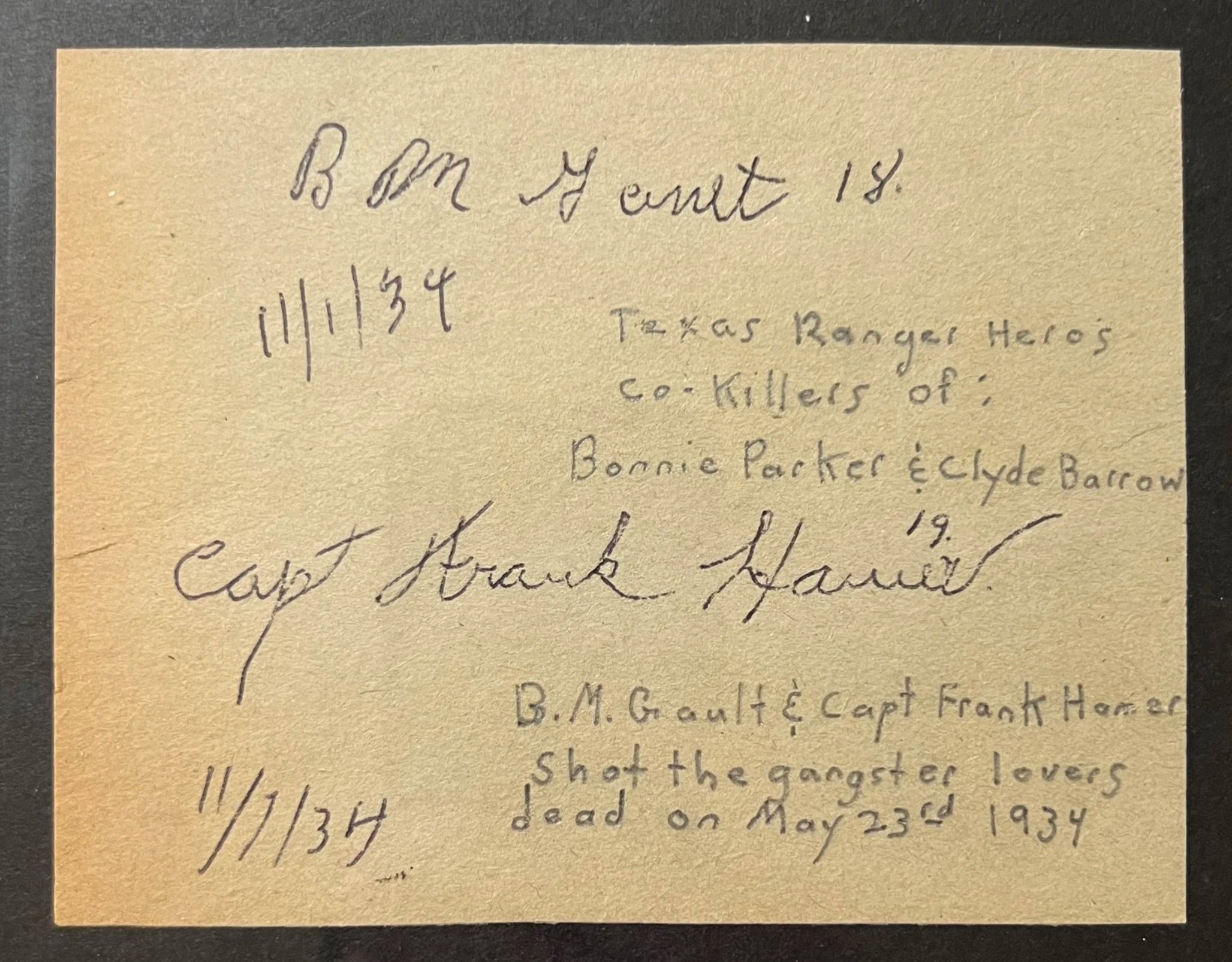
What sets this collection apart is the documentation, which is unusually direct for relics from the death car. O’Rear’s handwritten inventory lists the cartridges he took, with headstamps such as F.A. 32 and 33 (Frankford Arsenal), W.R.A. Co. and REM-UMC. It also records that Captain Hamer, after O’Rear admitted to feeling guilty about taking a handful of bullets, gave him two of his own, a .44 Special and a .45 Colt, both Remington-UMC. The collection includes notes bearing Hamer’s signature dated May 23, 1934, a framed note dated November 1, 1934 referencing Hamer and Ranger Manny Gault, three cartridges mounted on velvet, and a handwritten statement O’Rear wrote on May 1, 1985, after learning he had advanced cancer, so his family would have “more than my stories & a handful of bullets.” He also describes how his Claiborne Parish deputies had reported a suspicious car and couple on Highway 154 two days before the ambush, a tip that passed up the chain to Sheriff Henderson Jordan and then to Hamer. Together the cartridges, the signed notes, and the first-person account tie each relic to a named lawman who was at the car that day.