Phinney Money: An 1839 H. & E. Phinney Check From the Cooperstown Family Tied to the Doubleday Myth
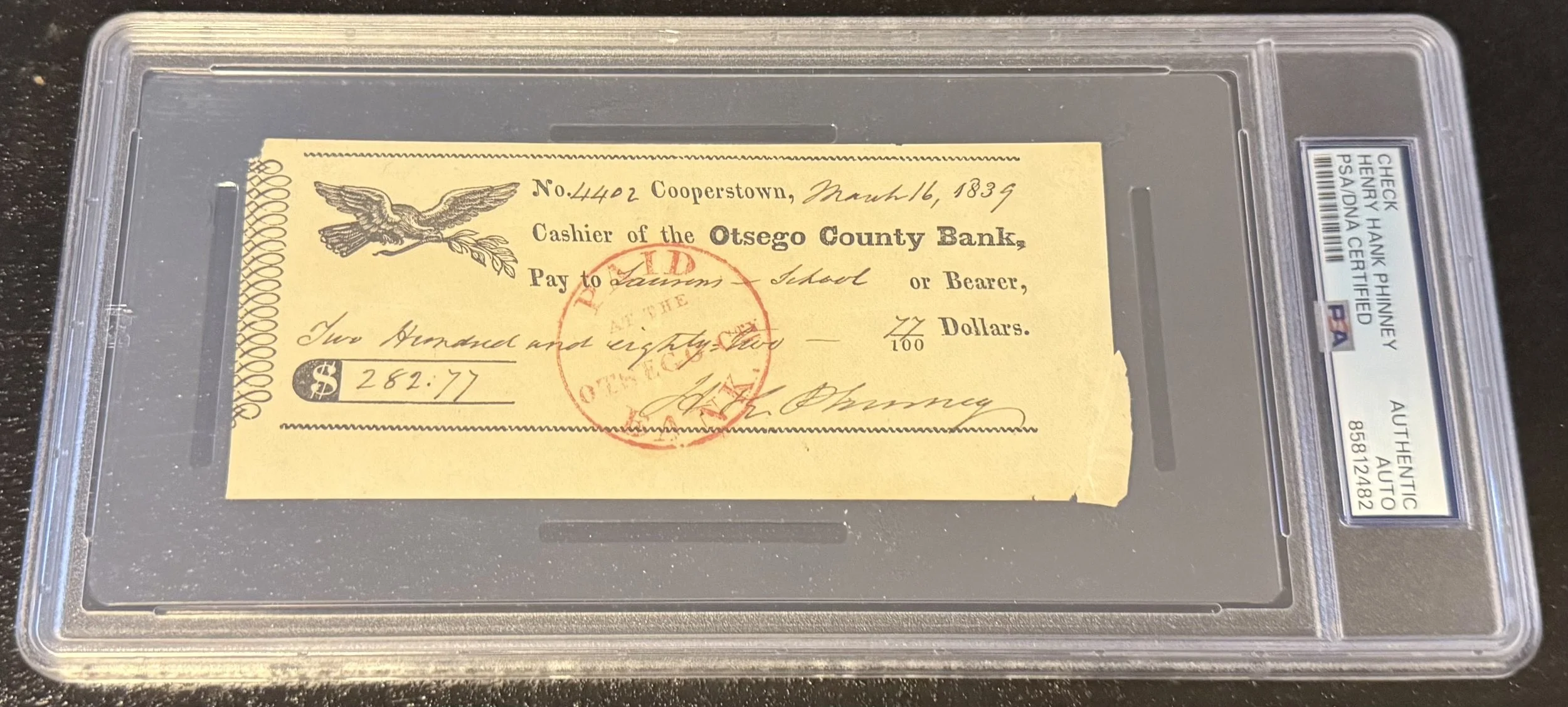
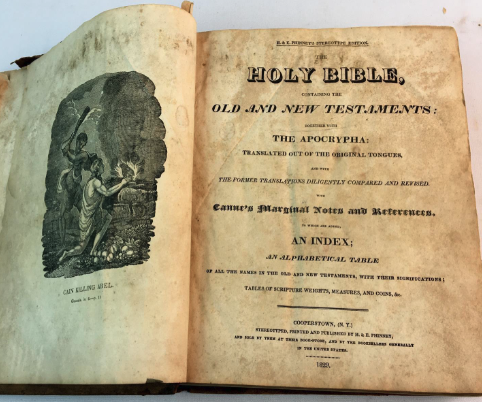
This is Otsego County Bank of Cooperstown check No. 4402, dated March 16, 1839, signed in period ink by H. & E. Phinney and made out to Laurens School for $282.77. The Phinneys were the leading printing and publishing family of Cooperstown. Elihu Phinney opened a printing and publishing business there in 1795 and printed the weekly Otsego Herald, and his sons Henry and Elihu Jr. took over the business in 1813 after his death, trading as H. & E. Phinney. Elihu Jr. was also supervisor of the Town of Otsego, which includes Cooperstown, from 1833 to 1840, so the check comes from two prominent local businessmen at the height of their influence. The check bears a period bank cancellation stamp on the front and is PSA/DNA certified authentic (cert 85812482). It measures about 6 x 2.5 inches and shows a vertical fold and light border wear, otherwise in excellent condition.
The family’s name carries weight in baseball history, even though the story behind it doesn’t hold up. In 1905, Abner Graves wrote letters recounting how a boy named Abner Doubleday laid out a game of “base ball” in the meadow at Phinney Farm, which Graves cited as a favored location for ballgames, and the claim that Doubleday regularly played there led to the purchase of the lot as a baseball park, now Doubleday Field. Historians have since discredited the claim that Doubleday invented baseball in Cooperstown in 1839. But the myth made Cooperstown the home of the Hall of Fame, and this check is dated in the same year and town as the legend, signed by the family whose pasture it was said to have happened in. A quiet, genuine document of Cooperstown’s printing and banking economy before baseball put the village on the map