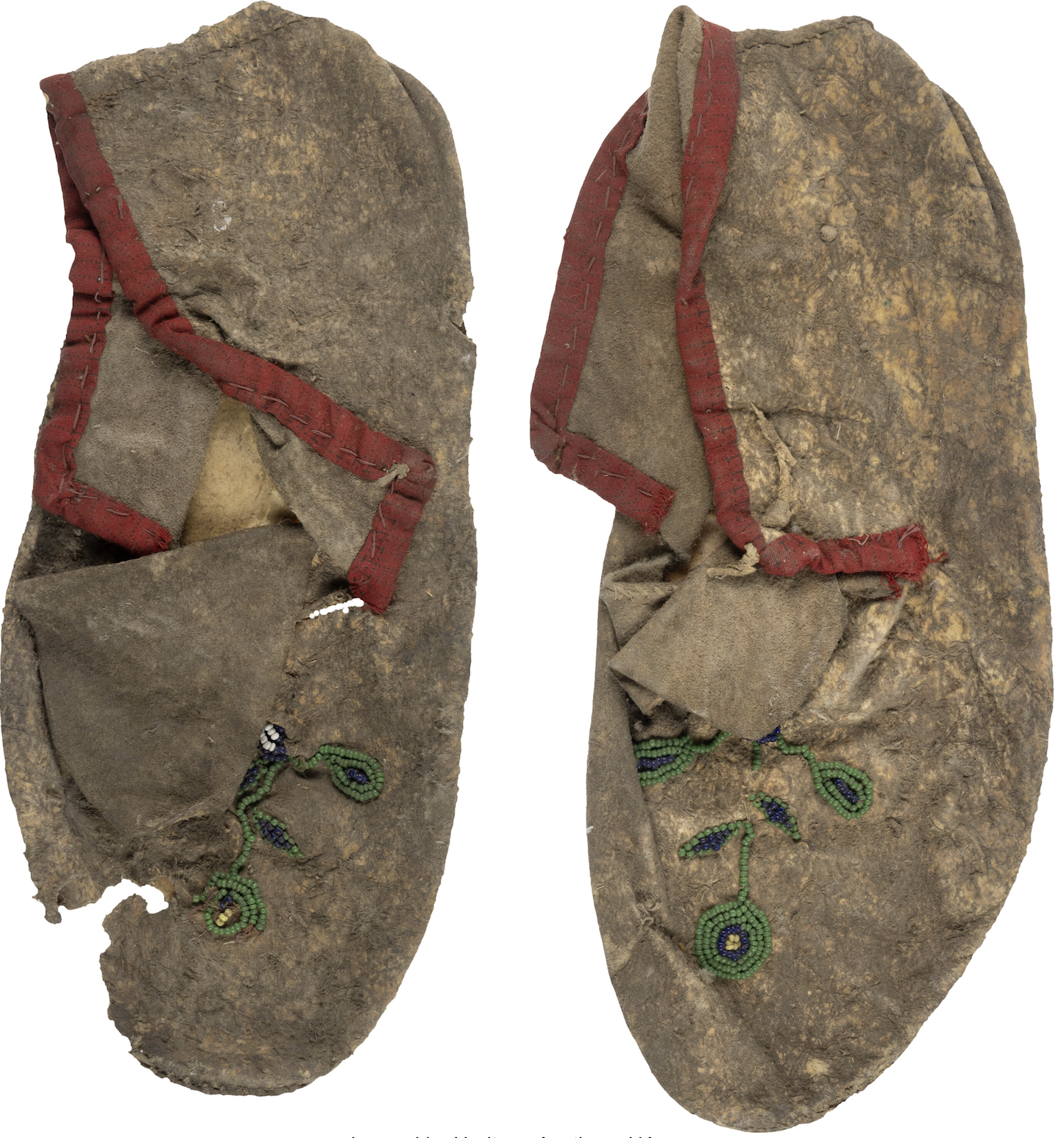
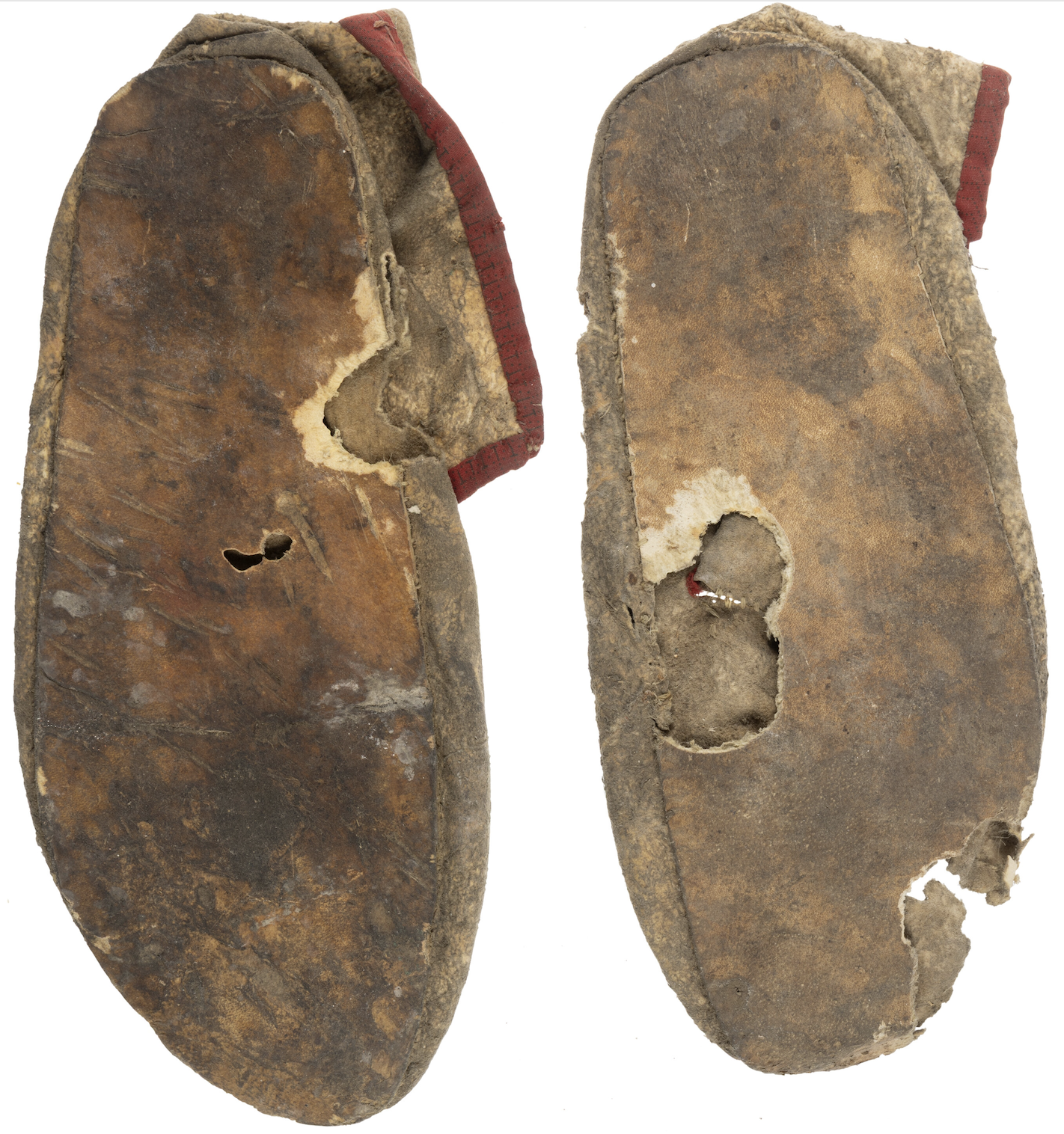
Worn Out and Left Behind: Jim Thorpe’s Personally Owned Beaded Moccasins, With Handwritten Family Provenance
Jim Thorpe’s case as the greatest athlete ever starts with how many things he did at an elite level. Born in Indian Territory in 1887 and educated at Carlisle Indian Industrial School, he was spotted by Pop Warner after clearing a 5'9" high bar in his work clothes, and became an All-American halfback, chosen on Walter Camp’s All-America teams in 1911 and 1912. At the 1912 Stockholm Olympics, the Sac and Fox Nation member became the first Native American to win an Olympic gold medal, taking both the pentathlon and the decathlon. His decathlon score was 688 points higher than that of the second-place finisher. Then he went pro in three sports. He played major league baseball from 1913 through 1919, with the Giants, Reds, and Braves, and became an early star of pro football and the first president of the organization that is now the NFL. He also played professional basketball. His medals were taken in 1913 because he had been paid to play minor league baseball, and the IOC finally restored him as sole winner of both events on July 15, 2022. In 1950, American sportswriters and broadcasters voted him the greatest American athlete of the first half of the 20th century. In my view, he is the greatest athlete of all time, and no one else has Olympic gold and a career in three professional sports.
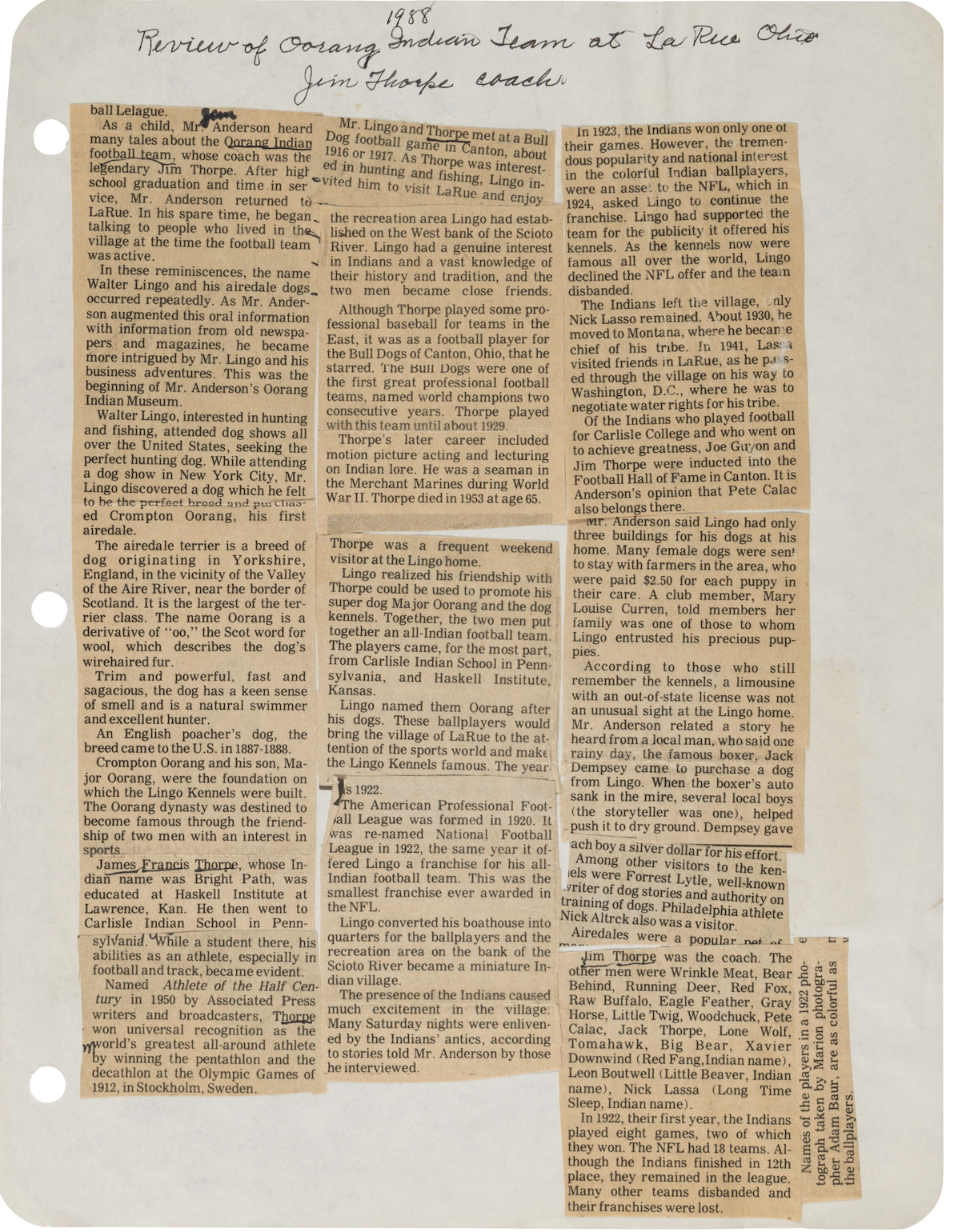
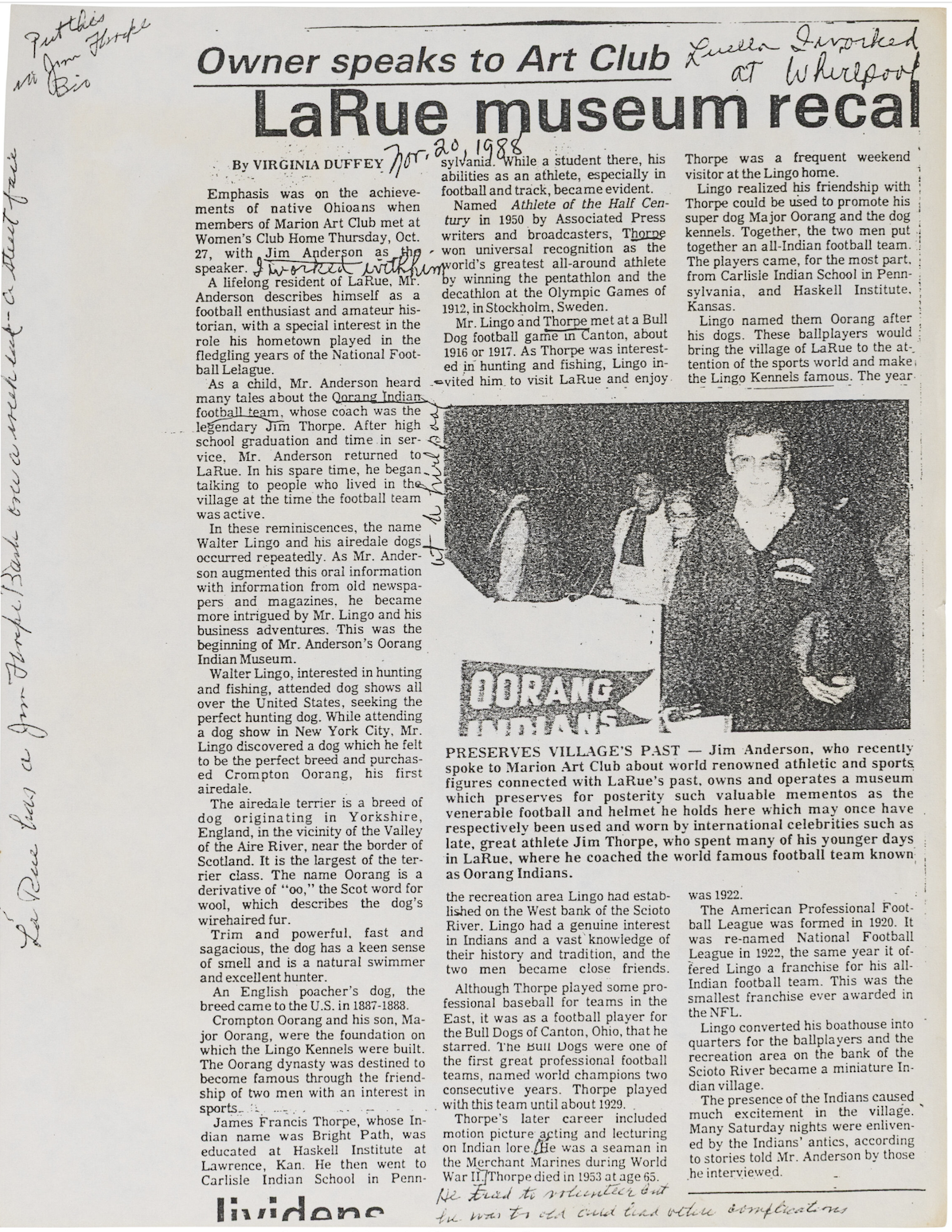
Part of his story played out in small-town Ohio. Walter Lingo of the Oorang Kennels in LaRue put together the Oorang Indians as a novelty team to market his Airedale dogs, with an all-Native American roster and Thorpe as its leading player and coach. Lingo offered him $500 a week to be player-coach and kennel supervisor, and bought an NFL franchise in June 1922 for $100. The Indians went 3-6 in 1922 and 1-10 in 1923 before folding, but Thorpe kept coming back to visit friends in the area.
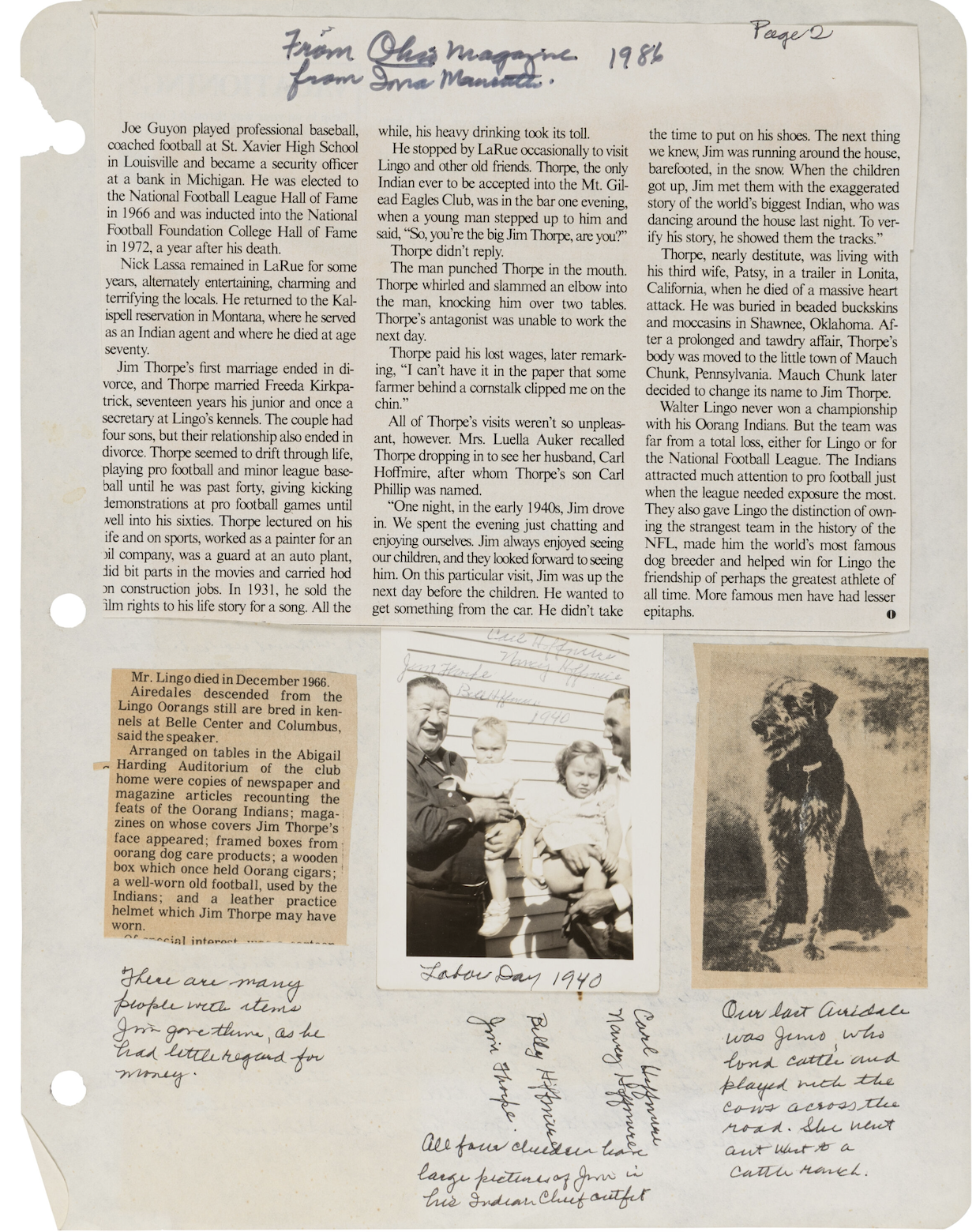
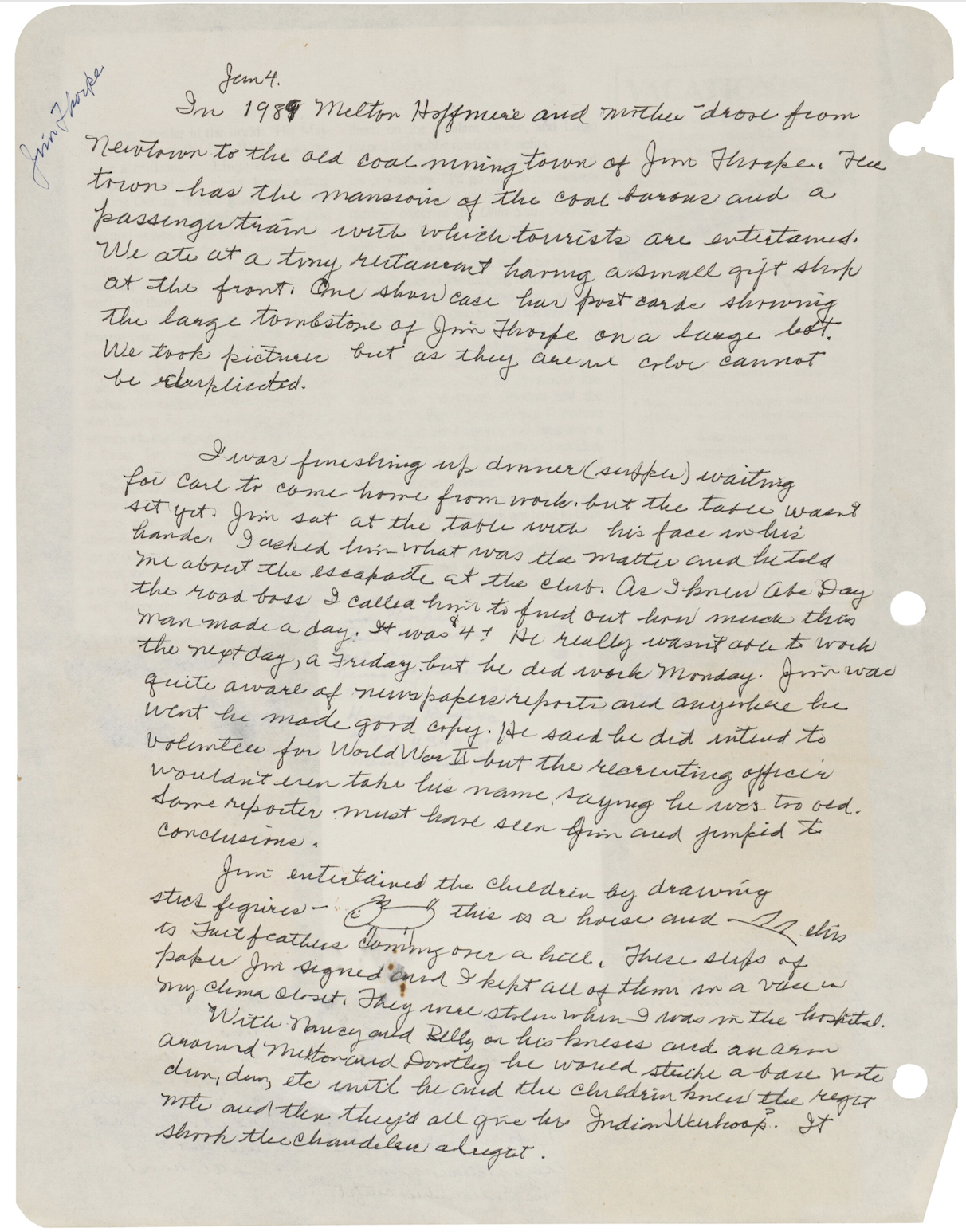
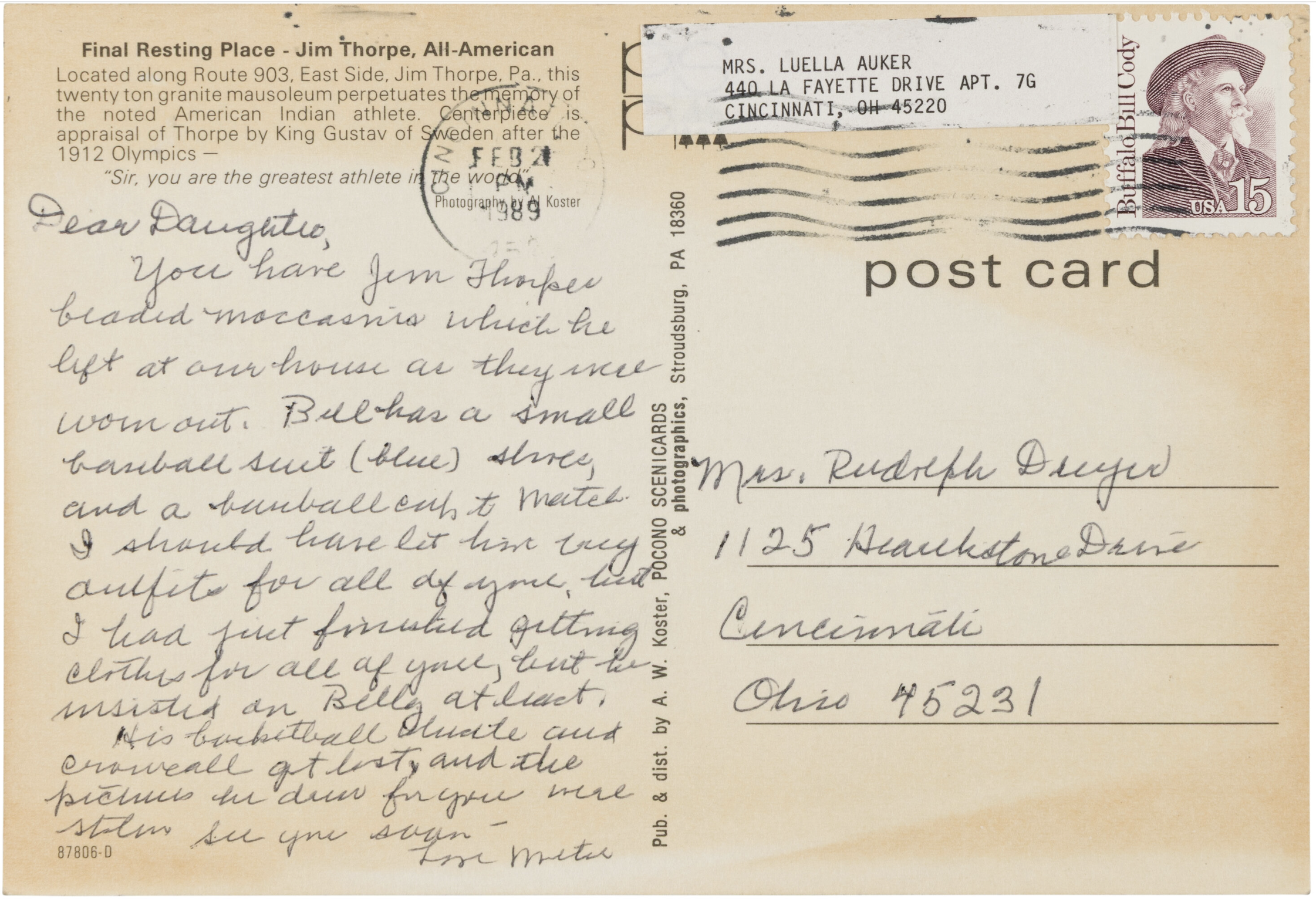
These beaded moccasins were his own. They come from the family of Carl Hoffmire, a friend Thorpe was close enough to that, according to a 1986 Ohio Magazine article in the family’s scrapbook, he named his son Carl Phillip after him. A February 1989 postcard begins: “You have Jim Thorpe’s beaded moccasins which he left at our house as they were worn out.” The card also records that Thorpe insisted on buying a small blue baseball suit, shoes, and cap for the youngest boy. The moccasins have green and blue beadwork on worn leather with red cloth trim, and one has some material loss, as you’d expect from a pair worn until it was ready to be retired. A pair of moccasins that belonged to the most famous athlete of the early 20th century, with the written family history to go with them, is a rare find.