The Smithsonian's Fight Over the Wright Flyer: Orville's Confidant Speaks From Inside the Feud
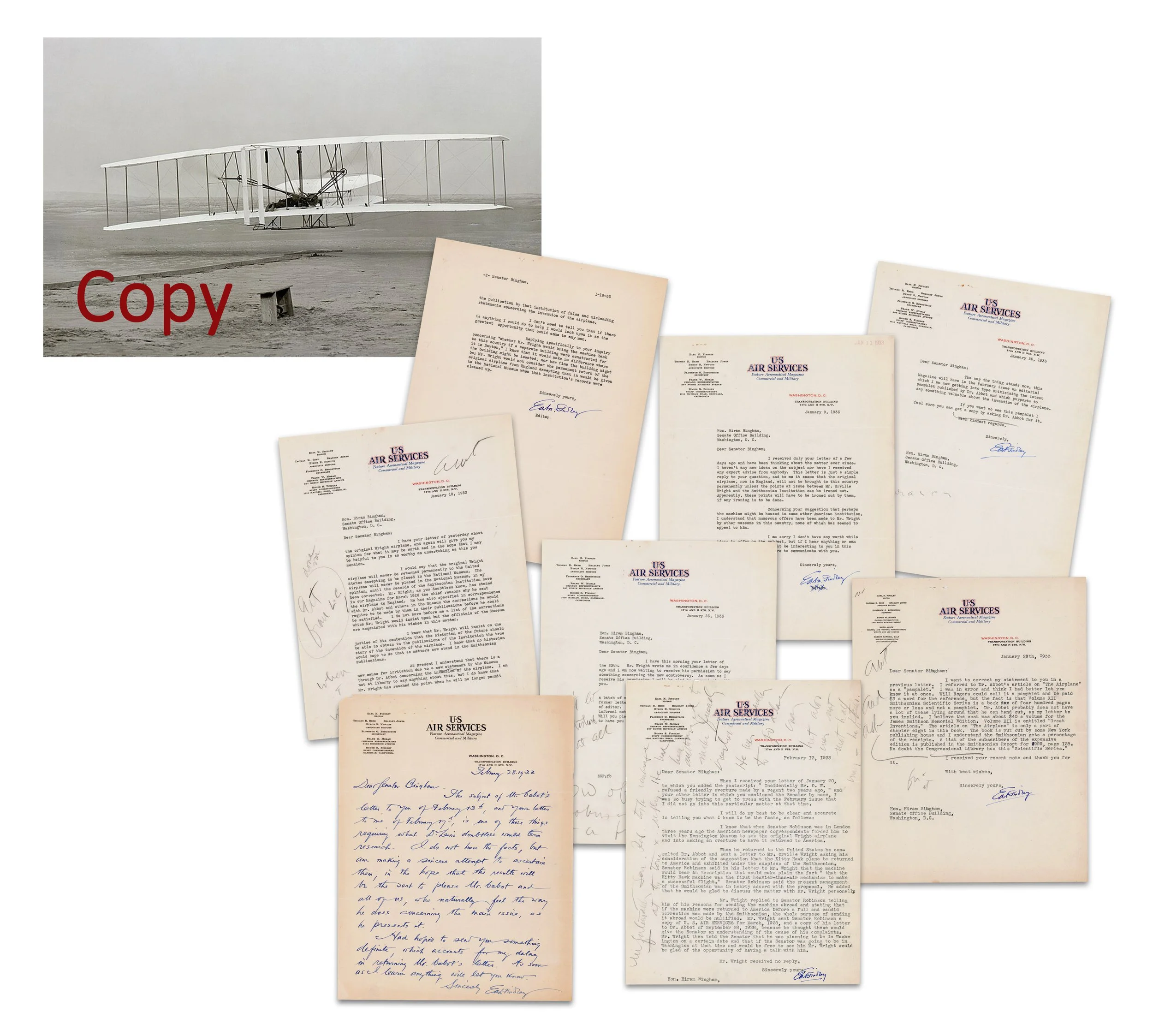
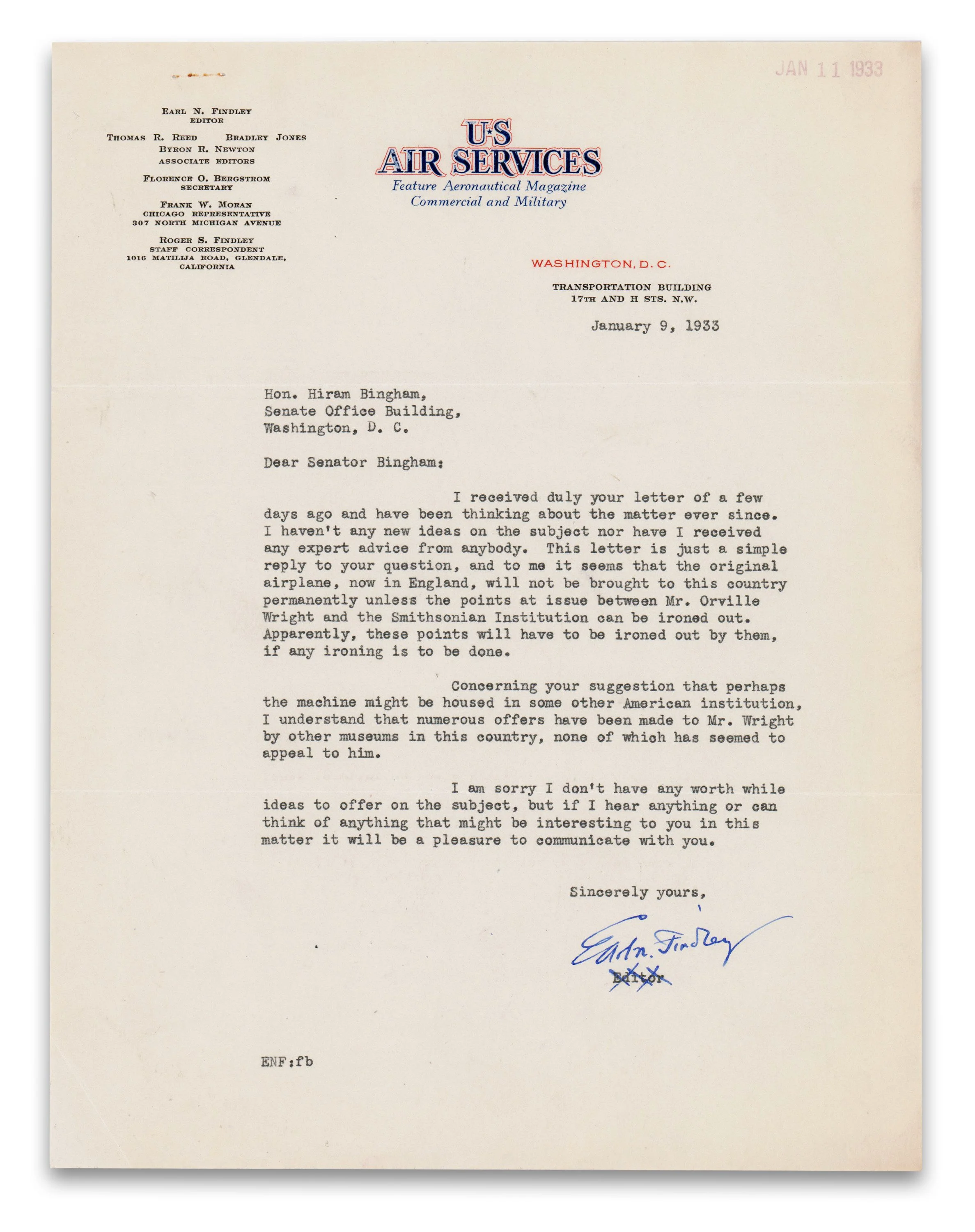
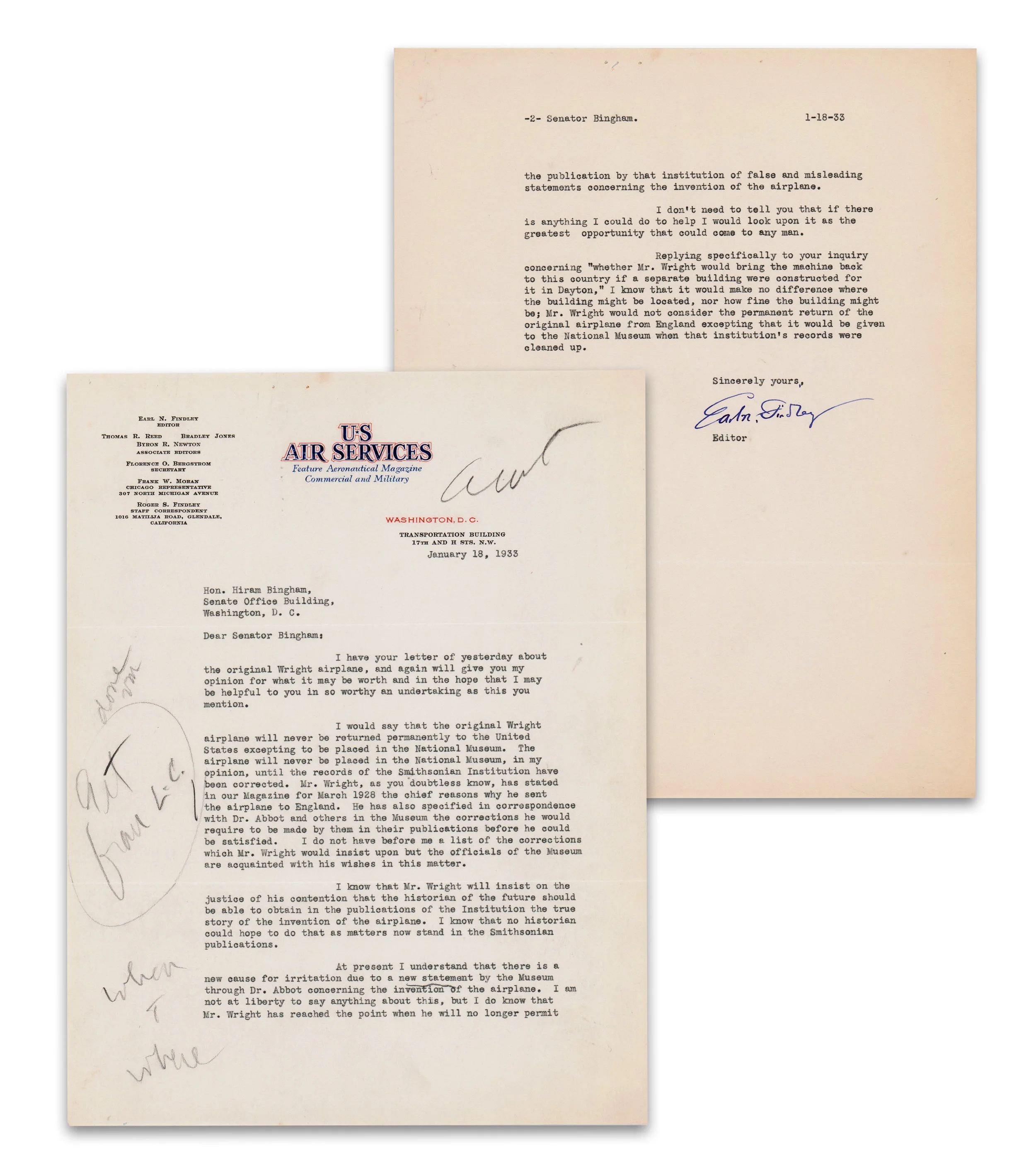
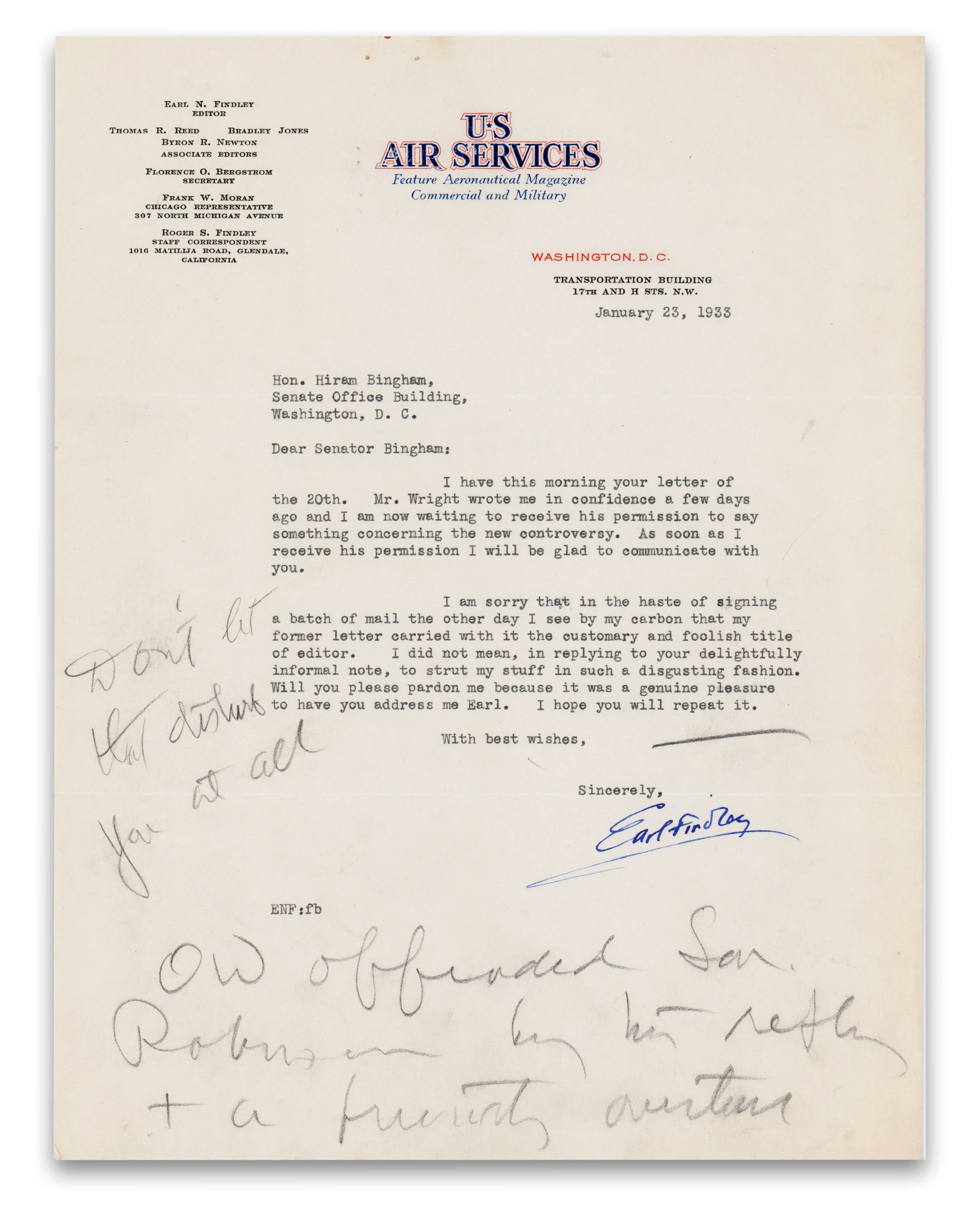
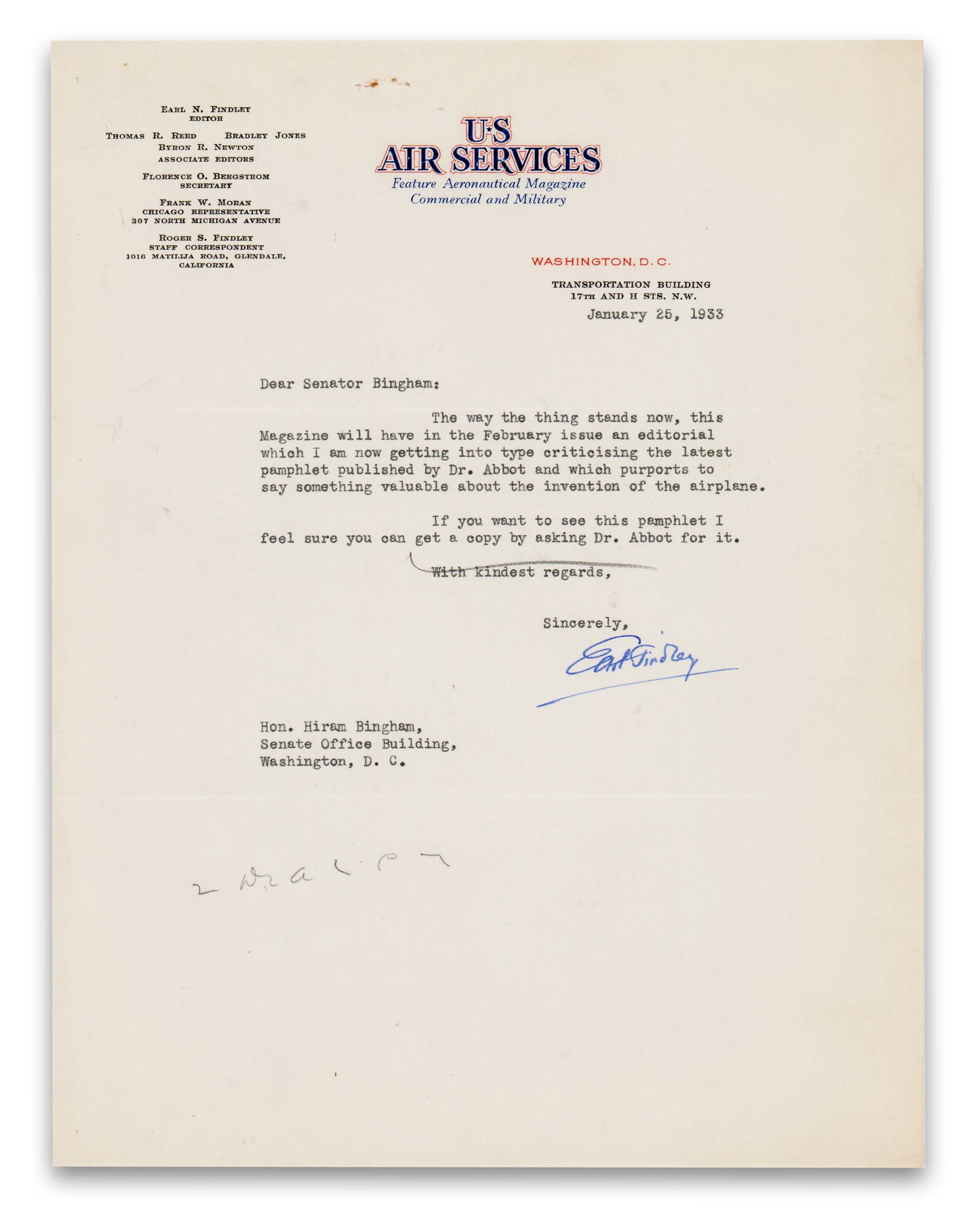
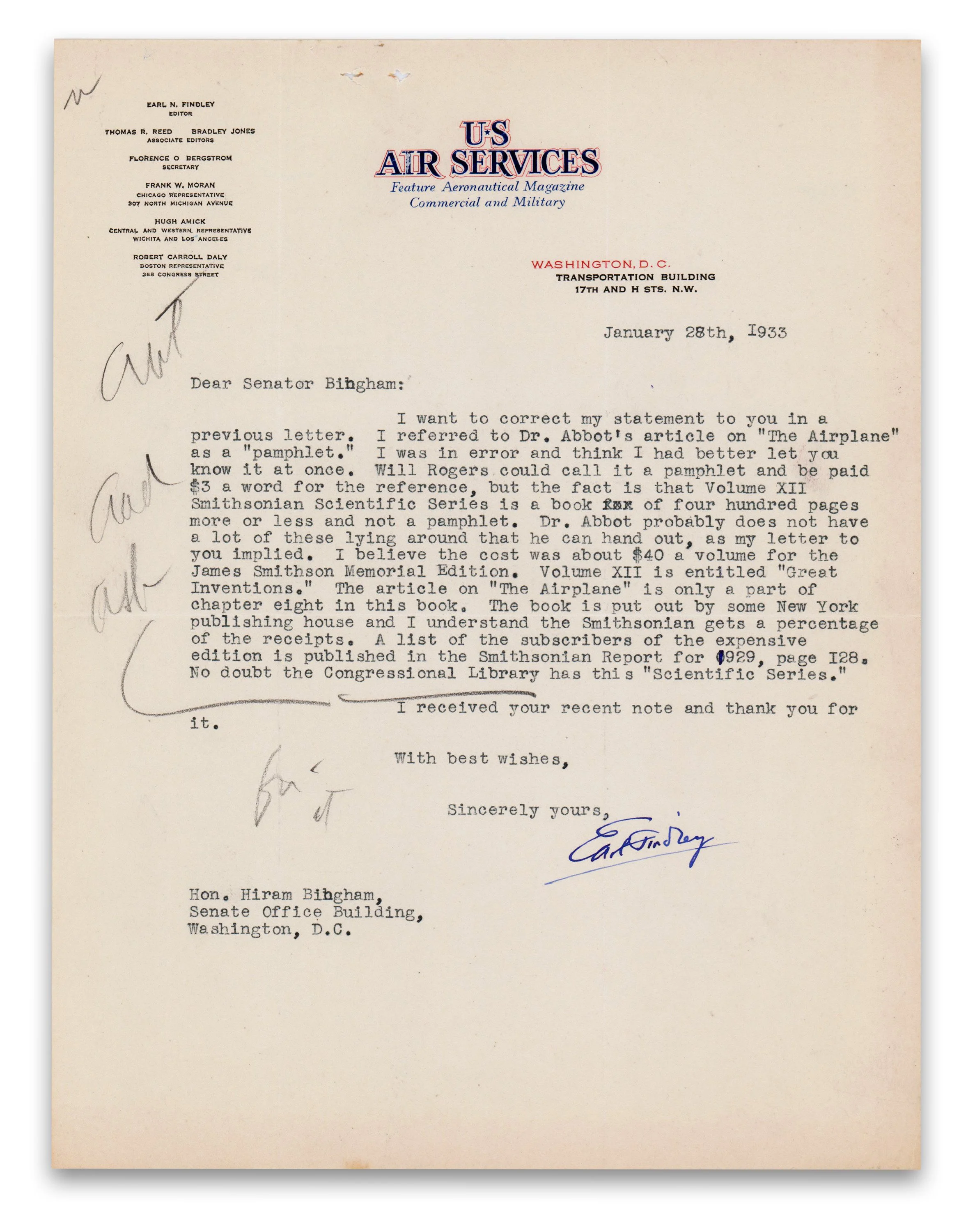
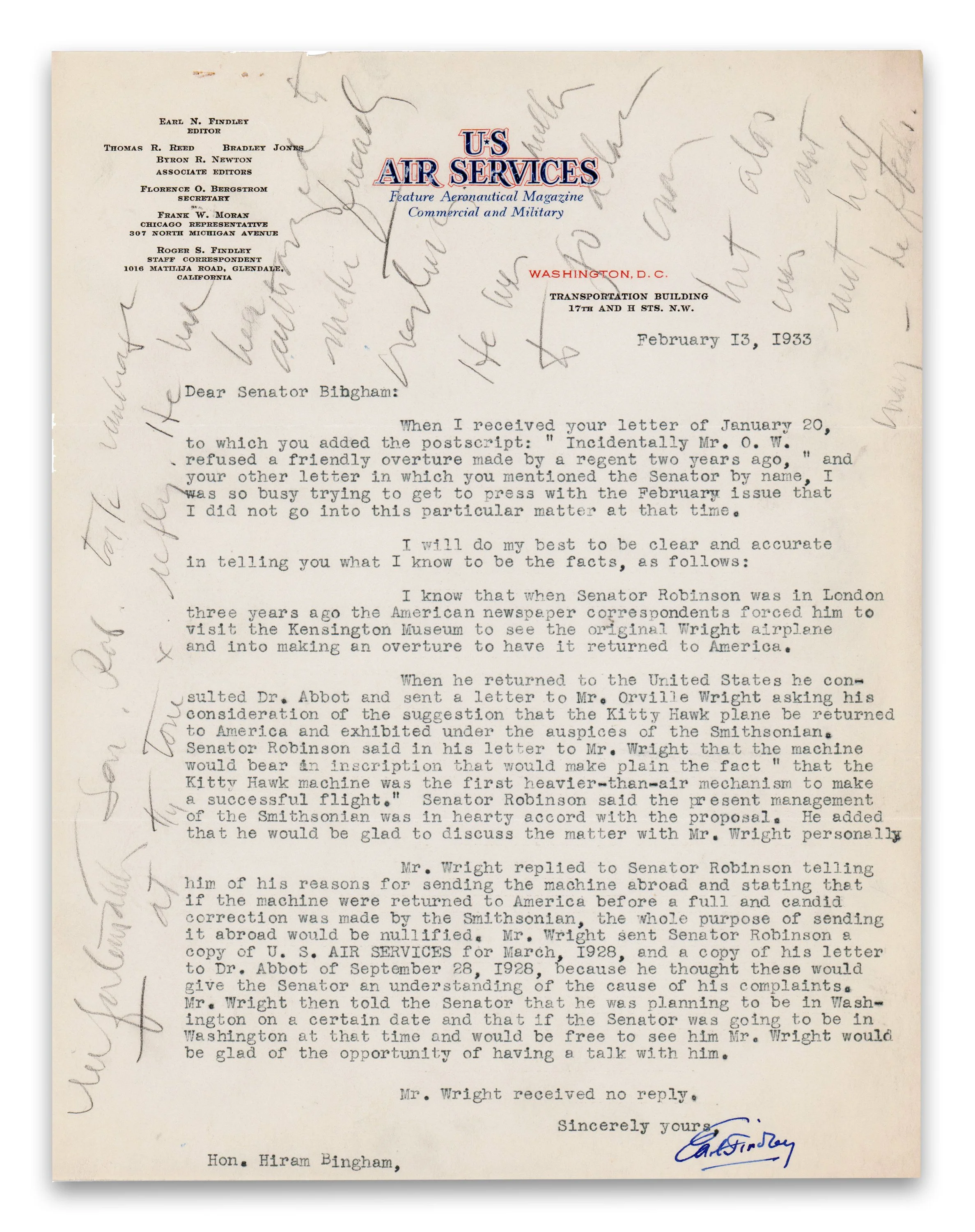
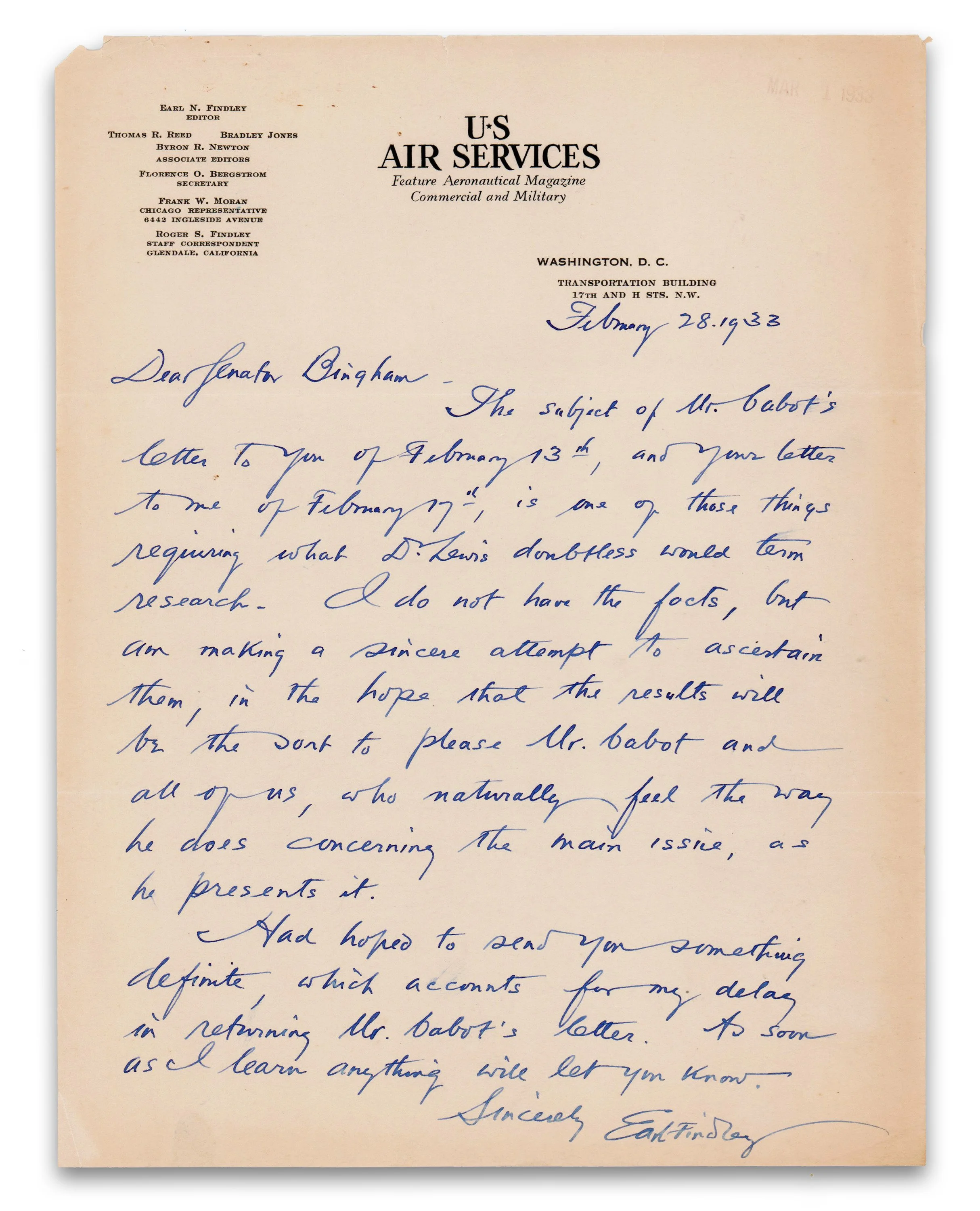
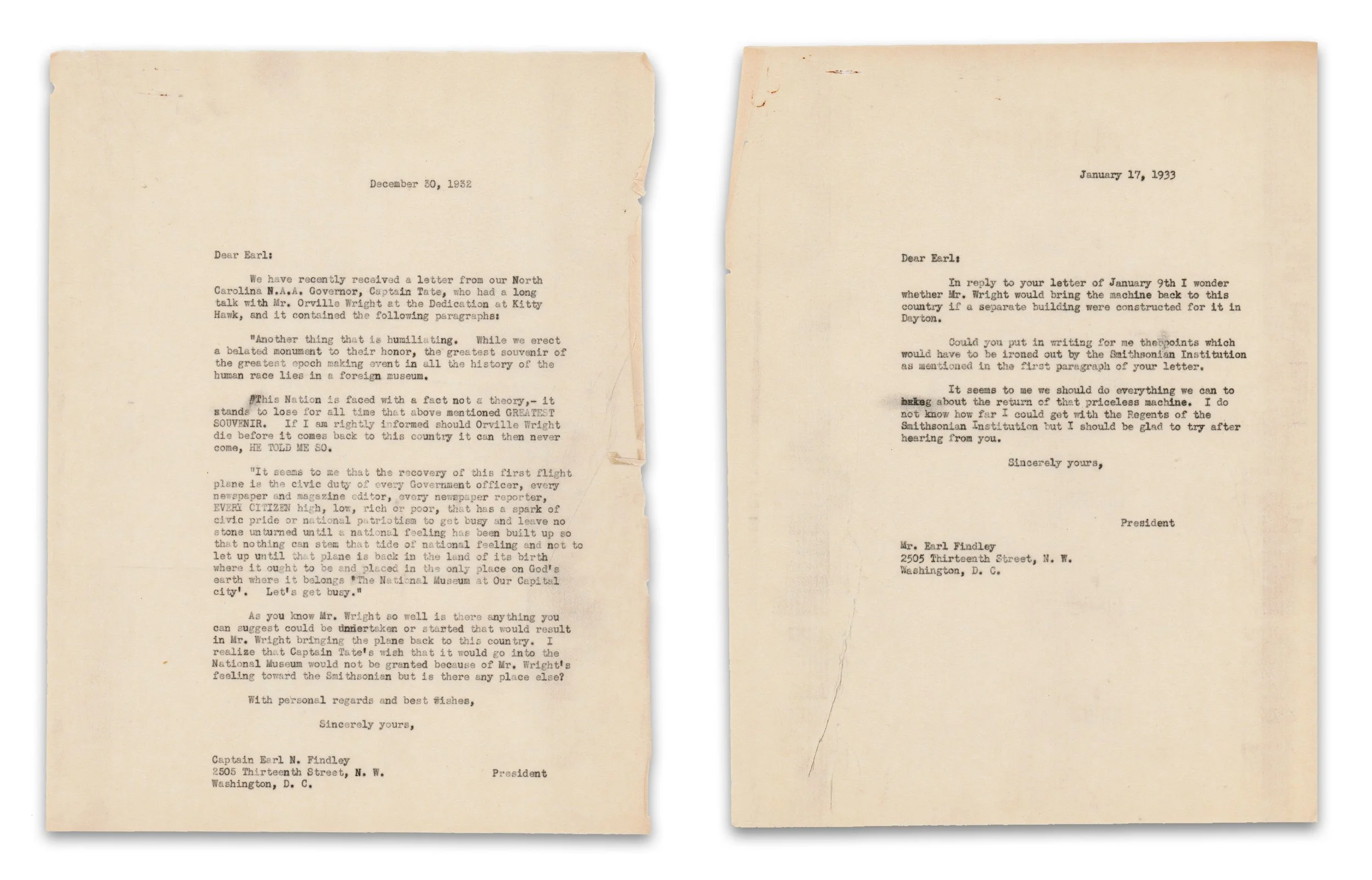
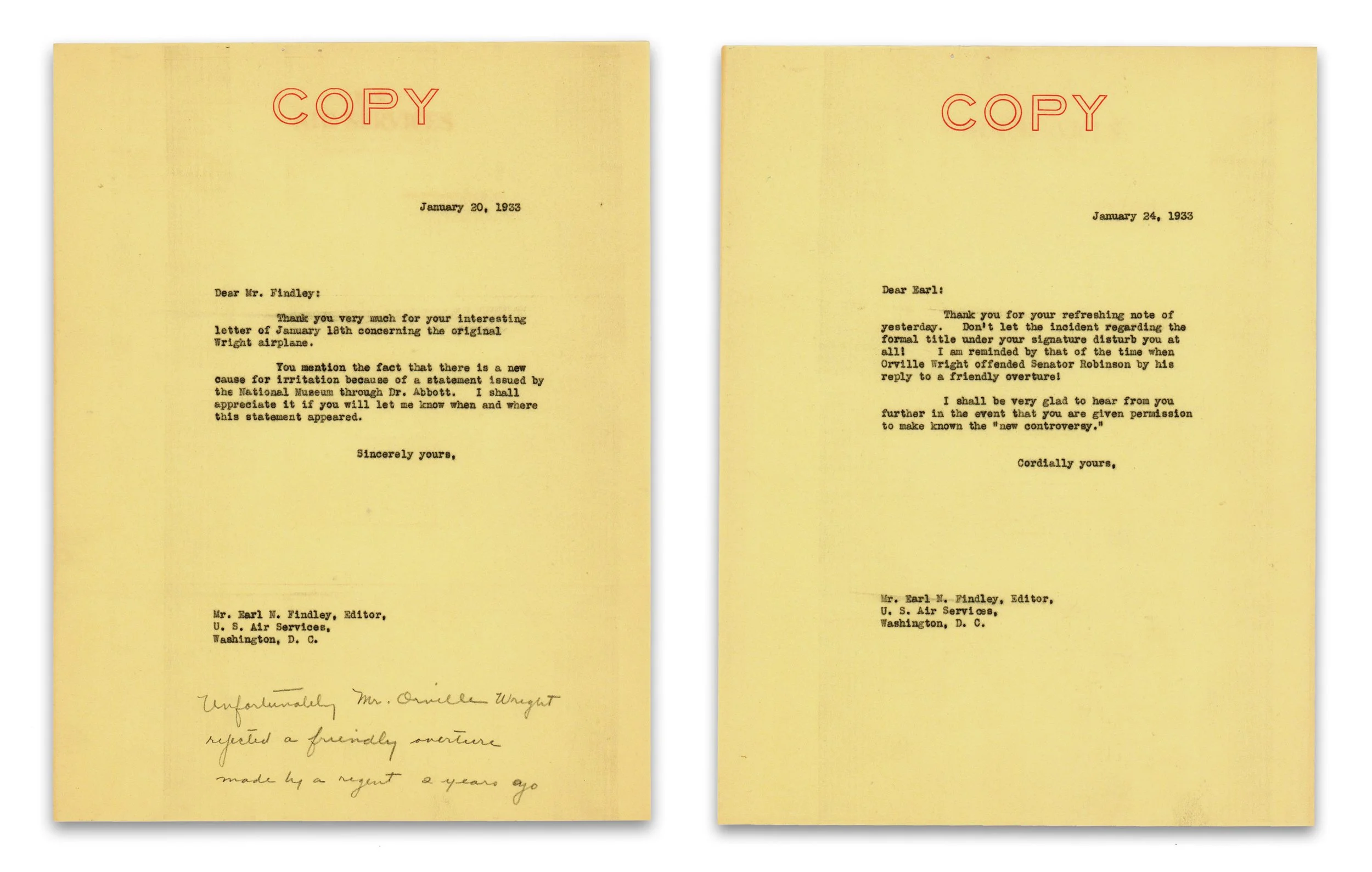
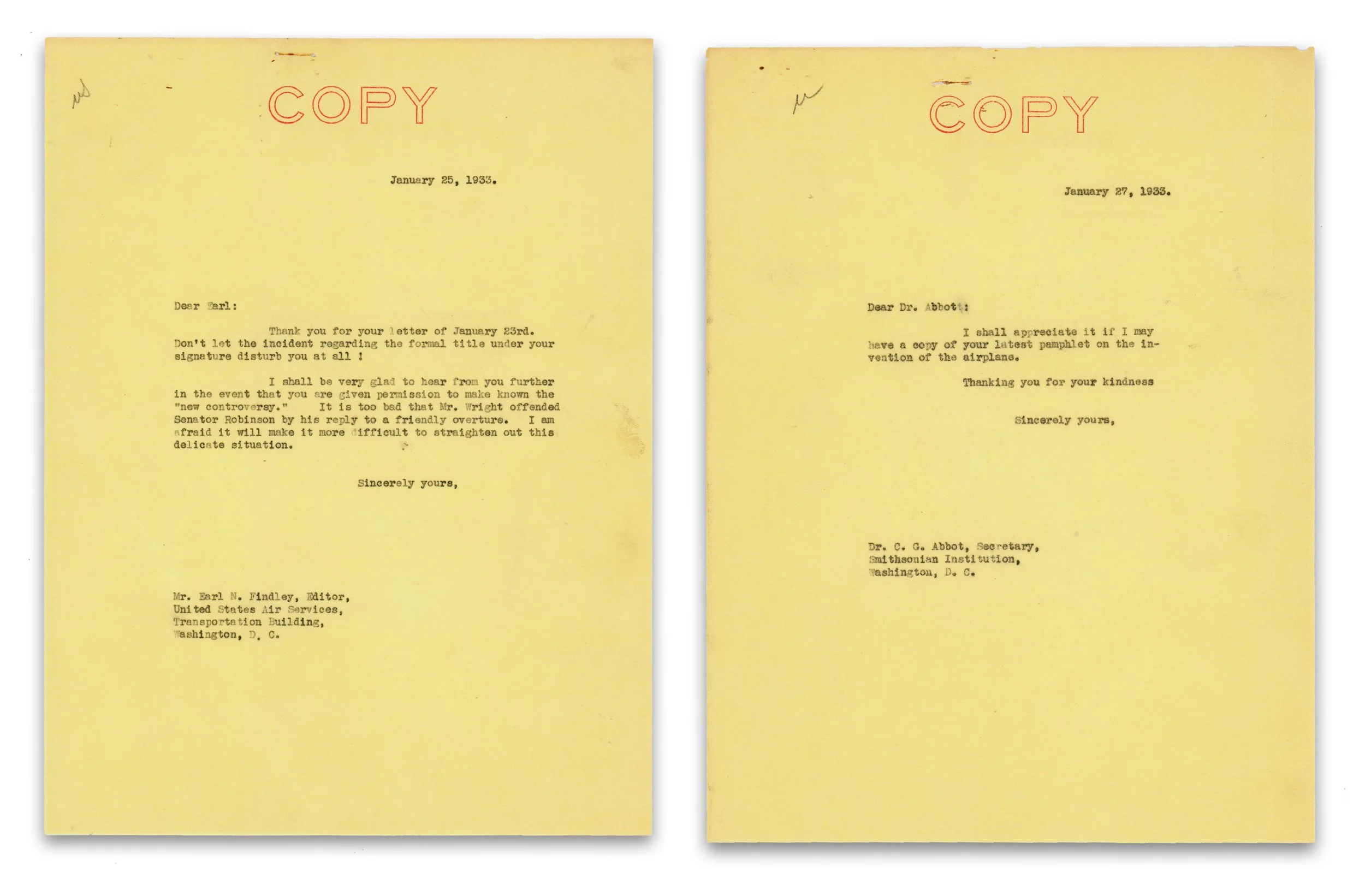
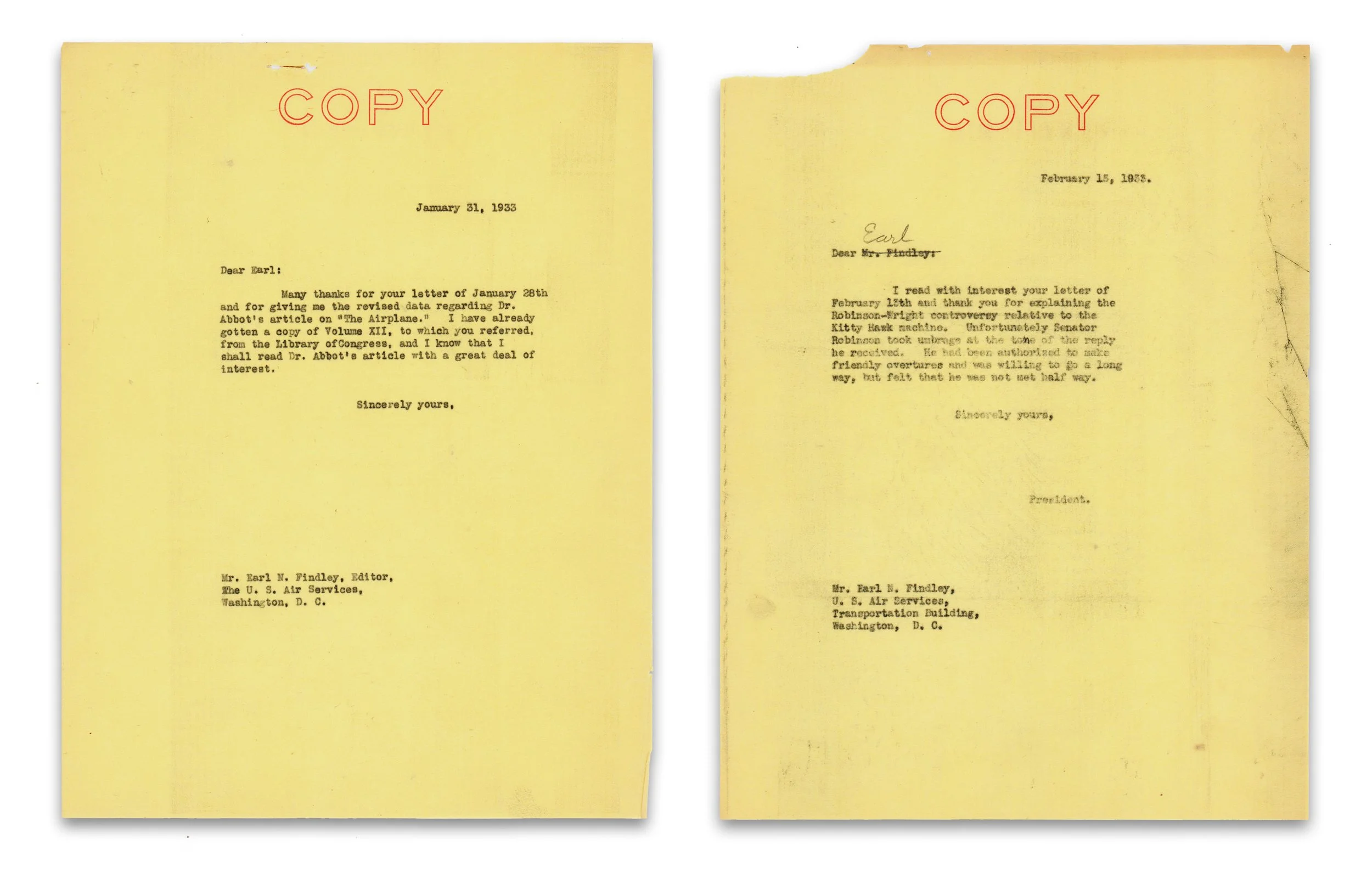
By the early 1930s, Orville Wright had been locked in a bitter dispute with the Smithsonian Institution for the better part of two decades, and this archive of letters lands right in the thick of it. The fight traced back to 1914, when the Smithsonian let Glenn Curtiss modify Samuel Langley's failed "Aerodrome" and then flew it just well enough to claim it had been "capable" of powered flight before the Wright Flyer ever left the ground. The Smithsonian put the doctored plane on display with a label crediting Langley, and Orville (Wilbur had died in 1912) considered it a deliberate attempt to rewrite history at his brother's expense. In 1928, fed up with the institution's refusal to correct the record, he shipped the original 1903 Wright Flyer off to the Science Museum in London, where it stayed for the next 15 years while the two sides dug in. These letters, written from December 1932 to February 1933, capture the standoff at its most stubborn: Earl Findley, Orville's closest confidant and the editor of U.S. Air Services, writing to explain exactly why the plane wasn't coming home anytime soon, and laying out Orville's terms for reconciliation in his own words.
Findley wasn't writing to just any senator. Hiram Bingham III had made headlines two decades earlier as the Yale explorer credited with bringing the lost Inca city of Machu Picchu to the world's attention in 1911, and by the early 1930s he carried real weight in Washington as a sitting U.S. Senator from Connecticut. That combination of fame and political standing made him exactly the kind of ally Orville's camp needed, someone with the credibility to press the Smithsonian and the platform to make noise about it if they didn't budge. What makes this archive valuable is Findley himself: not a bystander or a journalist chasing a story, but one of the only people the Wright family trusted enough to speak for them publicly, a relationship that started with a 1908 interview and lasted the rest of Wilbur and Orville's lives. His letters to Bingham are a firsthand account of Orville's actual position, written by the man Orville let carry his message. The dispute wouldn't be resolved until 1942, and the Flyer didn't return to America until after Orville's death in 1948. Correspondence from inside this fight is scarce to begin with, and an archive this substantial, connecting two towering figures of early 20th century exploration and invention, offers a rare, unfiltered look at how close America came to losing its most important aviation artifact to a grudge.